
“Far off in sunlit places
Sad are the Scottish faces
Yearning to feel the kiss of sweet Scottish rain
Where tropic skies are beaming” from “Scotland the Brave” words by Clifford Hanley
The words to the song ” Scotland the Brave” were written in 1950 by colourful Scottish journalist and novelist Cliff Hanley. The song was recorded by Scottish tenor Robert Wilson. Wilson died in 1964 at aged 57 as the result of a car accident. Hanley continued his career writing until his death in 1999. He had the honour of one of his TV scripts being described in 1964 as “the filthiest programme her family had seen on TV for a long time” by the English conservative and Christian moralist Mary Whitehouse . I imagine he was quite pleased. We were due to return to Scotland soon but in the meantime had a few final days to enjoy in the Provencal tourist town of Lourmarin.
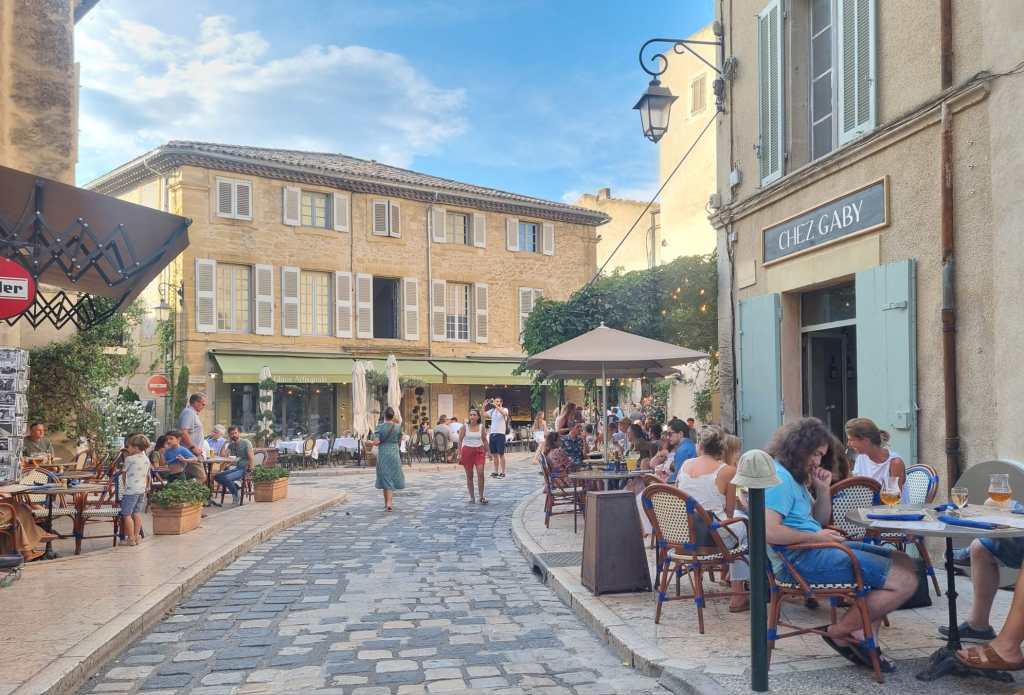
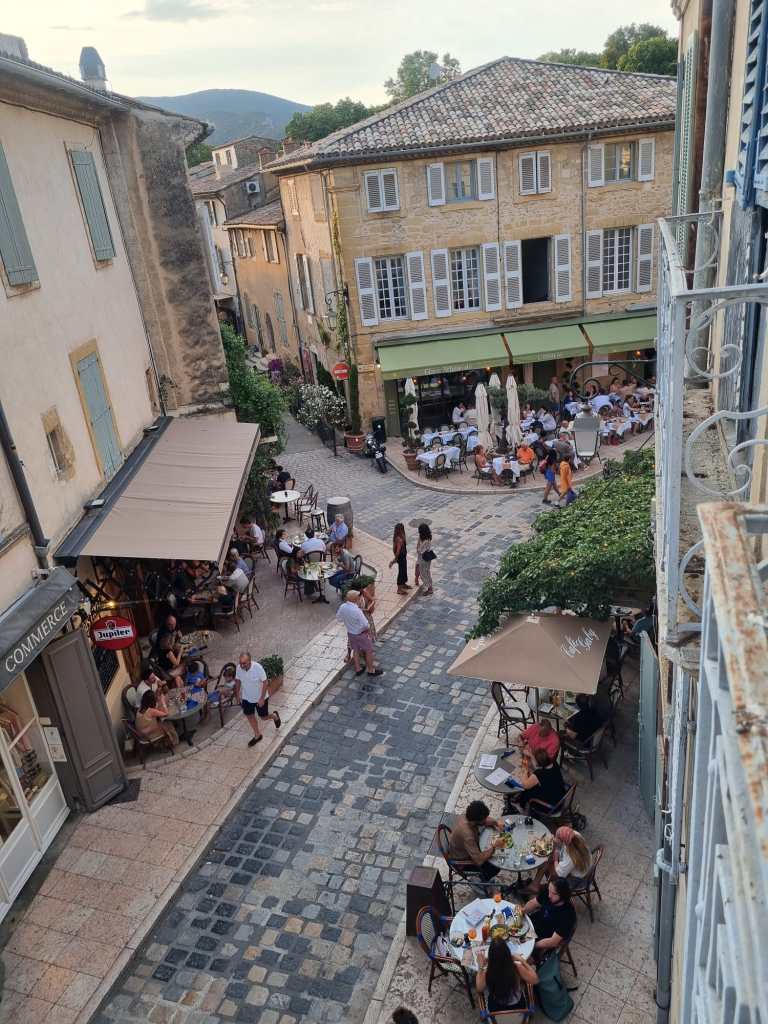
After a heart warming time catching up with friends in the Vaucluse we arranged a four day retreat in the Petit Luberon Valley town of Lourmarin. If spending time with countless French and British tourists in 40C heat in a small town of twisting and narrow cobbled streets is a retreat? It was marvellous. We so enjoyed the chance to spend time by ourselves amongst the bars and cafes, the markets and the boulangeries and the old Provencal countryside we had immersed ourselves in a decade or so before. We drank early morning cafe noirs and cafe cremes, ate croissants warmed with butter, broke crusty baguettes topped with olive tapenades and anchoiade and tried to beat the crowds for a late afternoon pastis and local rose. For Scout this is all about people watching and, my, there were a lot of people to watch. We haunted the local cafe and taverna “Chez Gaby”. Timing was everything in order to get a table. Our apartment overlooked the town centre so from around 4pm we watched and watched until we saw movement. I exaggerate, of course, as mostly we just strolled past and soon grabbed the first table to free up. Either way this was fun. Not for the first time we perused the real estate agents’ boards and websites for suitable Luberon Valley properties. Perchance to dream.
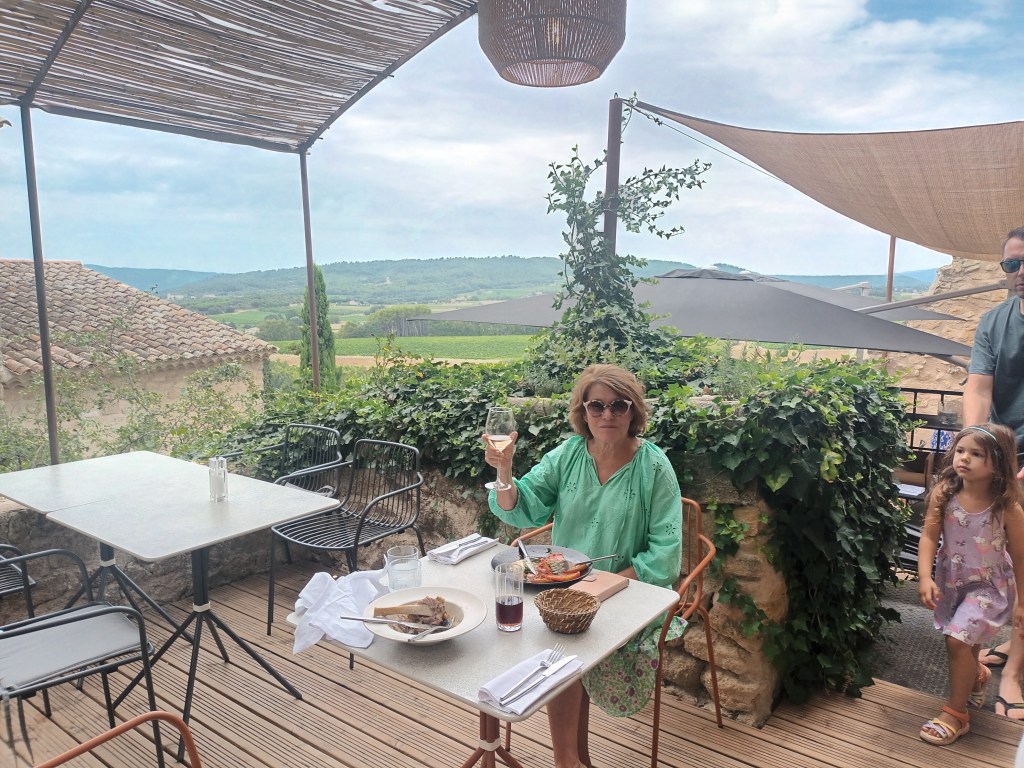
Lourmarin is a small hillside tourist town in the Provence-Alpes-Cote-d’Azur region in France’s south east. This is the France of Peter Mayle. The well known towns of Gordes, Bonnieux and Roussillon are within an hours drive. It has narrow cobbled streets lined with those typical tile and stone Provencal homes that everyone who doesn’t live there adores. It has an artistic flavour and is a short drive from a number of southern Luberon Valley working towns. We explored the region and had one marvellous lunch in Ansouis at La Terrase Resto overlooking vineyards sparkling emerald in the summer sun. We will return – but perhaps in September!
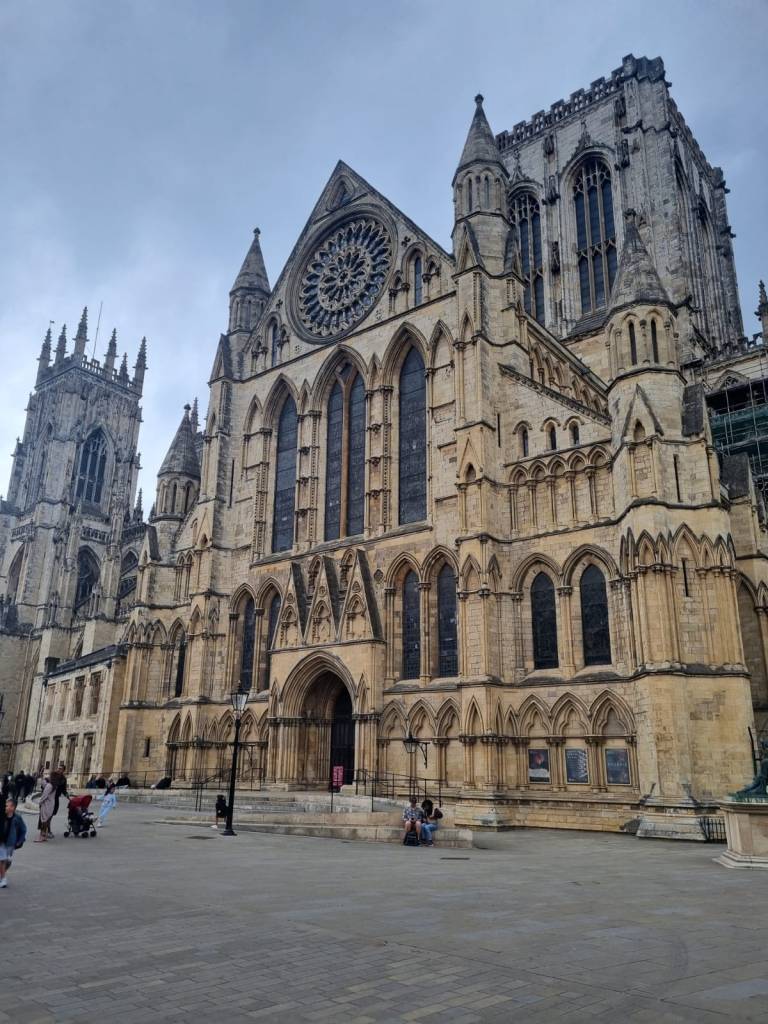
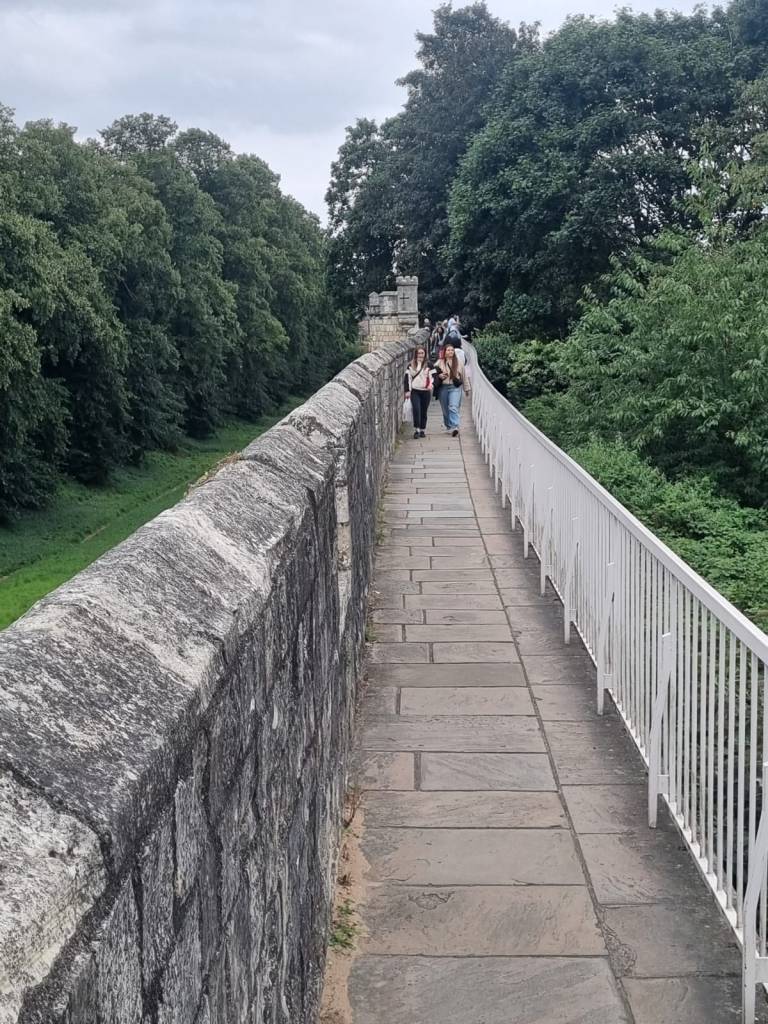
After a few days back in Wimpole, Cambridgeshire again wonderfully hosted by Peter and Lisa we headed north to Aberdeenshire for a much anticipated catch-up with Joanna. Regrettably Joanna had been away from the Chateau when we were there although a trip to the Scottish Highlands became a bonus. First stop though was York – a city we had not visited before. York epitomises the walled, northern Yorkshire towns established by the Romans although, York Minster its famous gothic cathedral wasn’t completed until the 13th century. It is a magnificent piece of architecture with its towering structures and stone walls. An Anglican cathedral, it is the home of the Archbishop of York who is second only in office to the Archbishop of Canterbury in the C. of E. structure. The walls surrounding the old town are open to walk and provide the perfect view of the town centre. The old town also hides a variety of hole-in-the wall pubs and restaurants along with the usual tourist outlets. Whilst most of its 142,000 population live outside the walls the city exudes history and is well worth a visit. We stayed in a lovely old brick guest house a ten minute walk to the walled town centre.
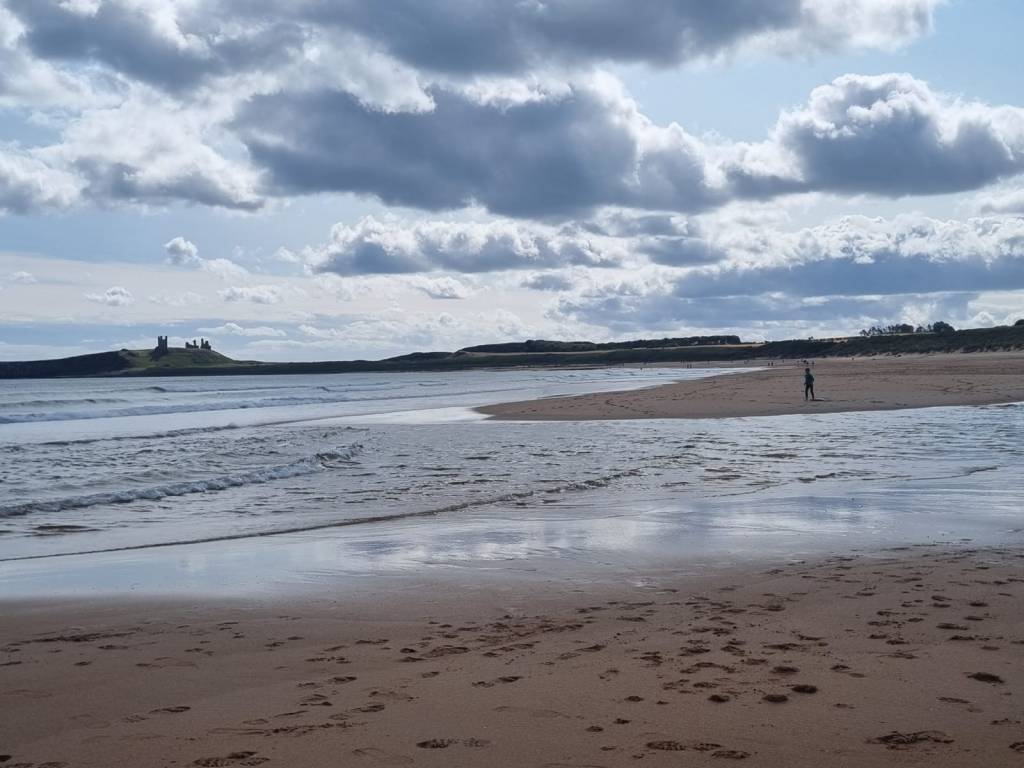
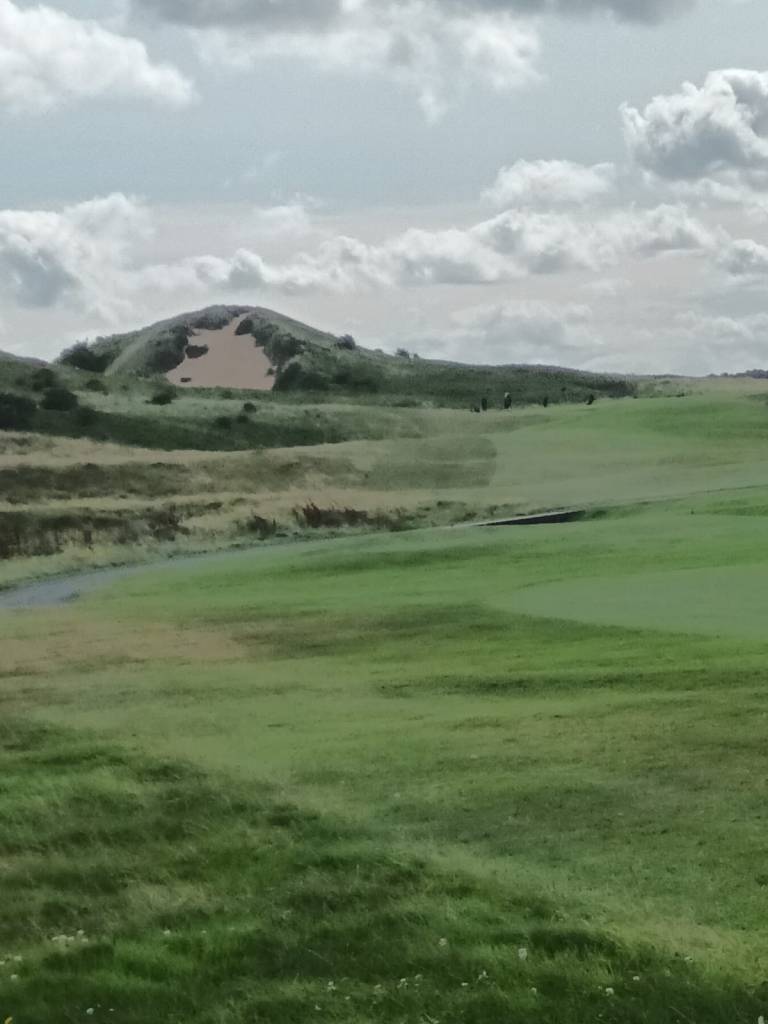
In 2000 during our earliest visit to England we had spent some time in Northumberland and in particular the seaside village of Embleton. This small village of one winding main street was set back from the sand dunes and curved around a small valley then opening onto Embleton Bay. It was also the home of Scout’s father Bill who emigrated to NZ (or jumped ship depending on the story) after the Second World War. Our route north took us through Embleton again and a nice lunch at the Dunstanburgh Castle Golf Club on the beach beside the village. On a glorious summer’s day we walked the beach and watched the kite surfers and golfers at play. Nostalgic for Scout? She didn’t say much so that probably tells its own story. I wondered how much family roots influence our personal viewpoint. I guess in the modern world where everyone can go anywhere not so much. But for our generation? Much more so I think.
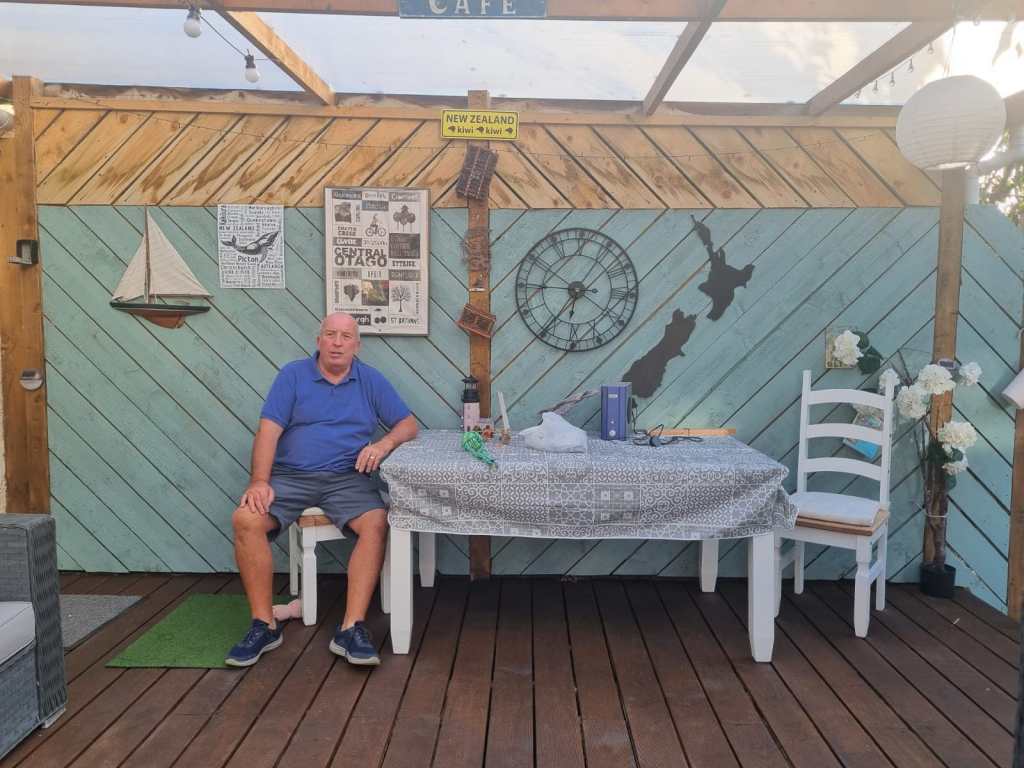
After a brief overnight stop in the delightful seaside town of Eyemouth in the Scottish Borders we were heading north to Aberdeenshire and Brux Estate. Eyemouth is a small fishing village and once the third largest fishing port by catch in Scotland and purportedly not far behind in smuggling. After six centuries the fishing industriy has scaled back although their was a surfeit of fish shops and fish and chip outlets. Nowadays, as indicated by the power company’s sign on a stone building on the port’s edge windfarming is the thing. On our walk we met an interesting ex merchant navyman who was about to emmigrate to NZ to join his son and daughter-in-law. He explained he had fallen in love with the country on his travels and had encouraged his son to move there. He had a very interesting display in his back porch.
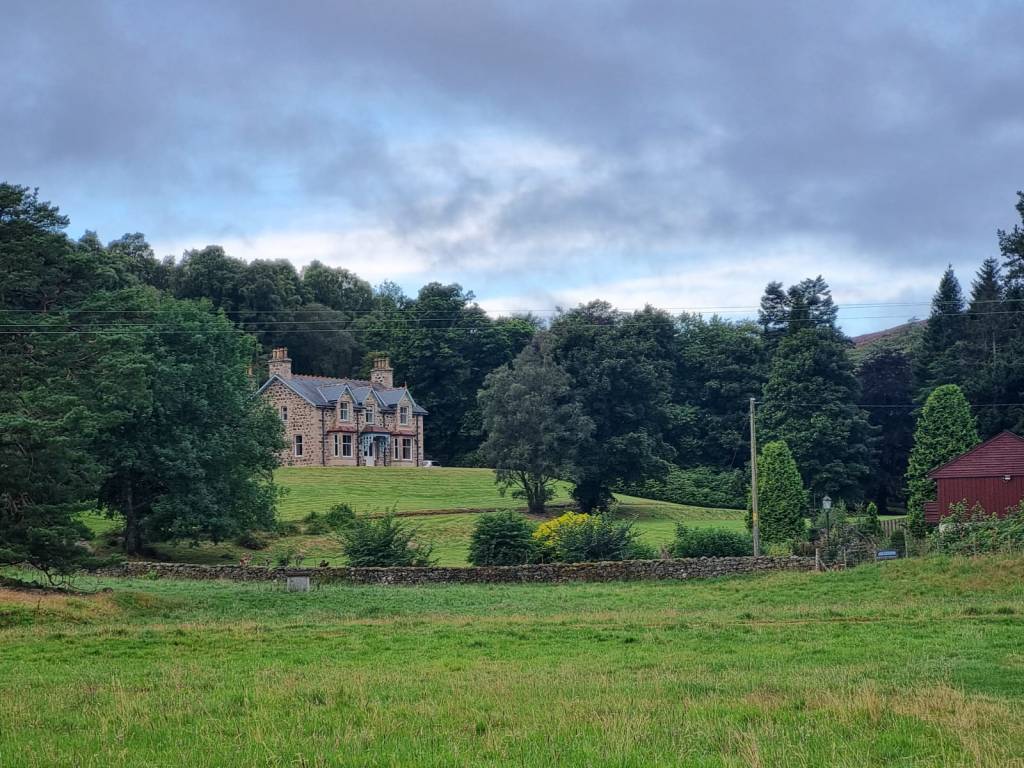
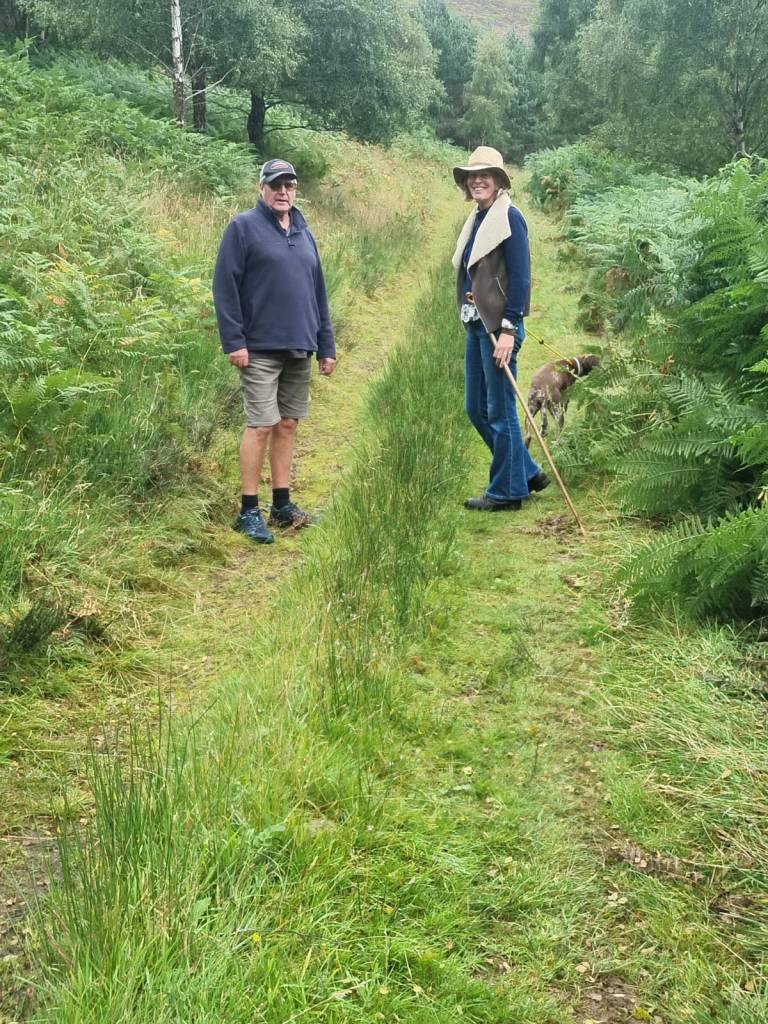
After driving some engaging backroads in the Aberdeenshire high country (lost? Scout never gets lost) we arrived at Brux, the beautiful highland country home of James and Joanna. Brux lies beside the River Don near the town of Alford some 30 miles west of Aberdeen. It is all heather covered hills and bush lined valleys and invites one to stop and stay. Life is walking the hills, fishing for trout and grouse shooting. Isolated. Quiet. And at the same time inviting and homely. We spent the day exploring the hills and catching up with Joanna and a delightful evening with the family. The highlight was the presence of Elva and Valentine. They were fourteen and twelve when we left the Chateau. Now before us stood two charming adults, both excelling in their chosen paths. Elva heading towards a Masters in Environmental Science and Valentine at art school in Florence, Italy. We saw some of his work and it is very good. And James and Joanna as always the perfect hosts.
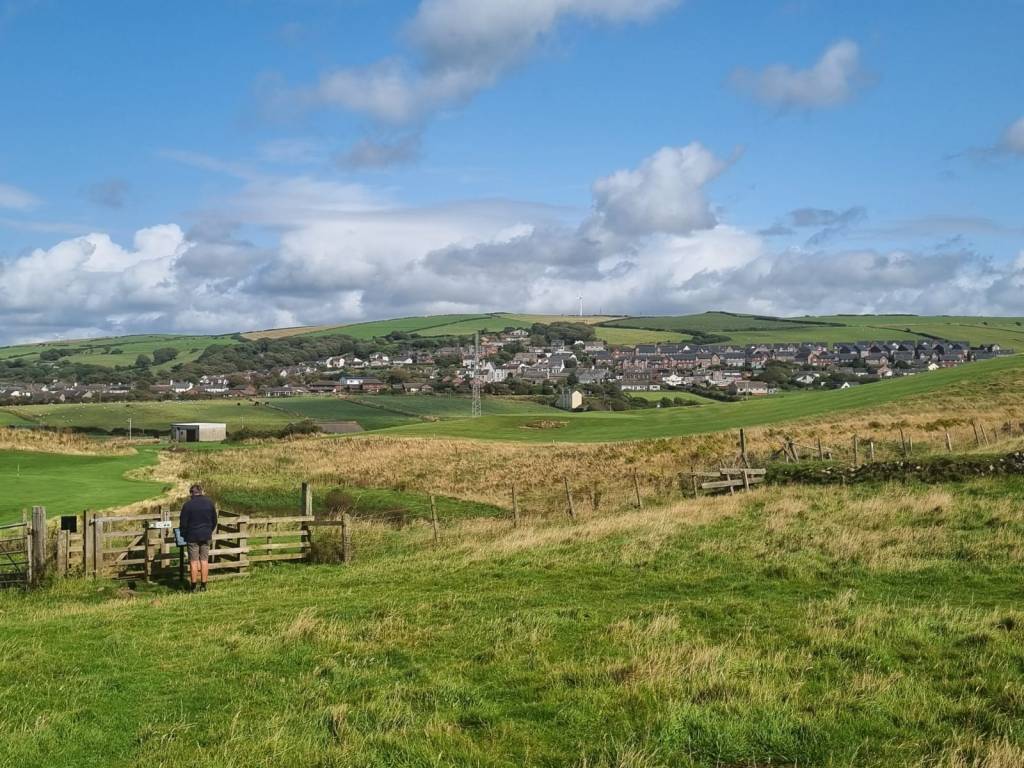
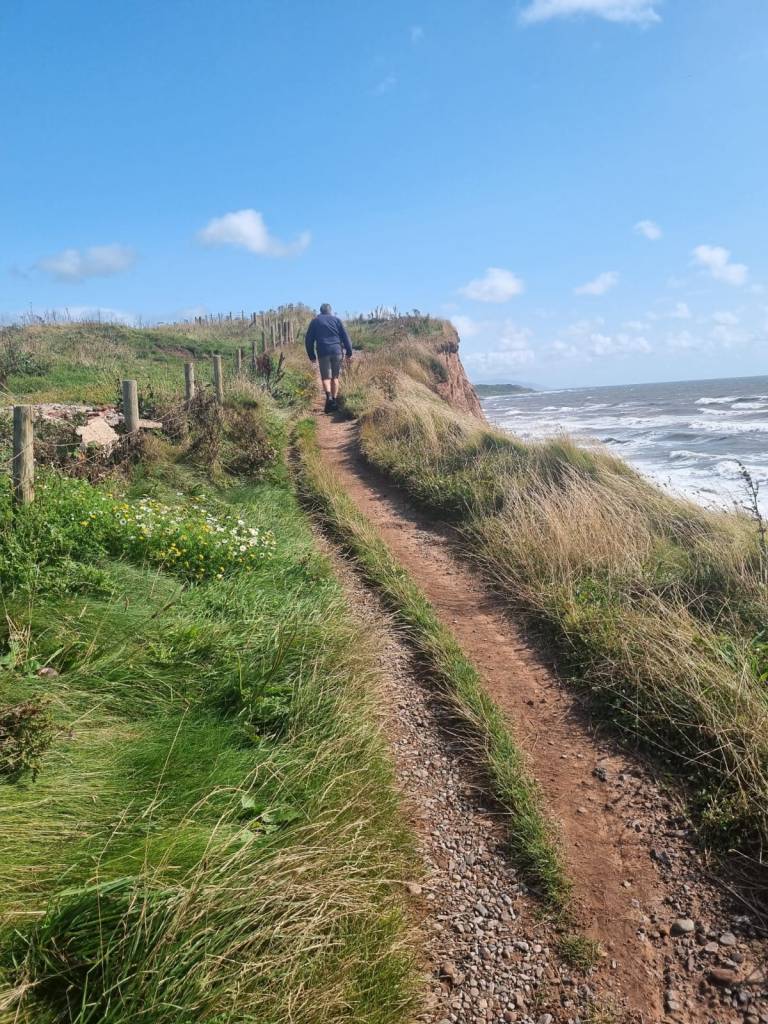
A little way south of the Lake District on the west Cumbrian coast of England is the delightful town of St Bees. We had a very pleasant two nights here. St Bees originates from 850AD but hit its straps in the early eleventh century when the Normans arrived. A large priory was established which lasted around 500 years. The impressive buildings still exist today and serve as the local parish church and school. The town itself sits on the hillside overlooking Fleswick Bay and the Irish Sea and is a lovely mix of pubs, stone cottages and more modern large homes. The town has thrived a little because it has become the home to many professionals who have moved there and are involved in the long process of decommissioning the nearby Sellafield nuclear power station. Today though St Bees is more famous as the start of the Wainwright Coast to Coast Walk across England to Robin Hood’s Bay on the west York Moors on England’s east coast. Coincidentally Scout and I had both just finished reading David Nicholl’s new novel “You are Here”. The book tells its love story while the characters walk the Coast to Coast. It is highly recommended by the “Scout and My Book Club”.
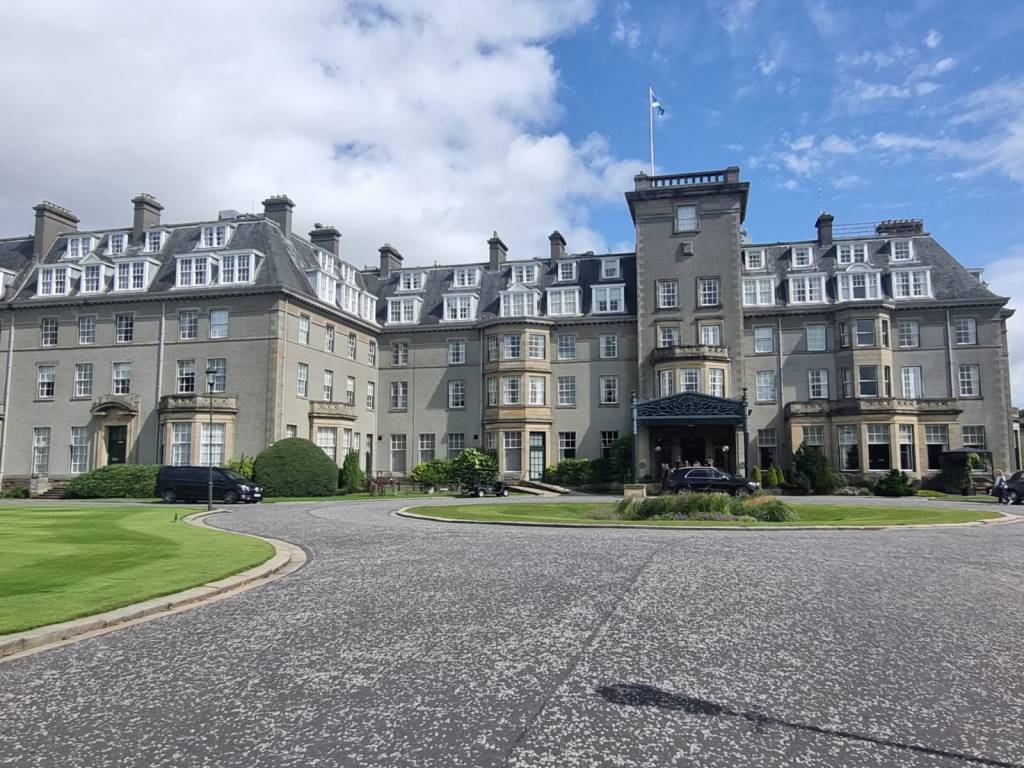
It was time to head for London and a flight home. After a visit to the renowned country estate Gleneagles Hotel and Golf Club situated an hours drive north west of Edinburgh we had a night in Dumfries, a pleasant market town just north of the Lake District and where Robert the Bruce once holed up and crossed the border back into England. An inquiry regarding green fees at Gleneagles elicited the response that it was only 350 pounds for 18 holes, discounted to 275 pounds if you are a guest in the hotel. Maybe next time.
After one more day in London we departed Heathrow airport for Singapore then home. We have had a most wonderful five weeks. The UK and France are very different places both charming in there own way. But it is the people you meet and the memories you take that count. James and Joanna, Guy and Emily, Fabrice, Cathy and Sylvain, Dominique and Jackie and friends. You are the best. We can’t thank you all enough. And to “the Irish”. Peter and Lisa. What can we say but thanks for looking after us in the spirit of Ireland. And please to you all – our Australian home is yours whenever you wish. Beidh muid ar ais go luath. Nous reviendrons bientot. We will return soon.
We had another night in London with Emily and Guy before flying out from Heathrow after a wonderful five weeks. We cannot thank all of you who showed such kindness and generosity to us. James and Joanna, Fabrice, Cathy and Sylvain, Dominique and Jackie and friends, Guy and Emily. We owe you all and you know our Australain home is your home when needed. And how can we thank “the Irish”. Lisa and Peter who hosted us in their home in Wimpole. We can’t thank you enough. Beid muid ar ais go luath, nous reviendrons bientot, we will return soon.

 Travels With Mr Gato Downunder