

“Fall down seven times, get up eight.” “Tomorrow, tomorrow’s wind will blow.” “Continuance is strength.” “He who chases two rabbits will catch neither.” Some Japanese Proverbs which define the Japanese ethic of perseverence and practicality.
Left – Kinkaku-ji – the Golden Temple
It is a 500 km or two and a half hour train ride from Tokyo Main Station on the Shensanken across Honshu Island to Kanazawa. All in comfort and mostly through the Japanese countryside. The bullet train rockets along but not too fast that we couldn’t enjoy the sights of small agricultural villages with rice paddies, patchwork fields of vegetables and small groups of cattle grazing in the grassy fields surrounding them. Everything looked idyllic from our seat on the train. The news in Japan suggests an undertone of disgruntlement with the way the economy is moving and in particular the cost of living and the daily effort to keep on top of things. Familiar? As a tourist this is not noticeable and no doubt tourism helps earnings and the economy. Visitor numbers we saw certainly seem to be there and well priced airfares obviously help. Over thirty six million tourists visited Japan in 2024. Let’s say they all spend a few thousand dollars each, well … that is a lot of foreign exchange. Kanazawa was no different. Politeness and helpful locals make travelling here a pleasure. Kanazawa is a city of around 460,000 people and the capital of the Ishikawa Prefecture on the west coast of Honshu Island. It is marked by its situation of surrounding hills and rivers which give it a natural fortress feel and the city has had its moments of power in Japan over the centuries. It is now worth visiting for its culture and gardens.


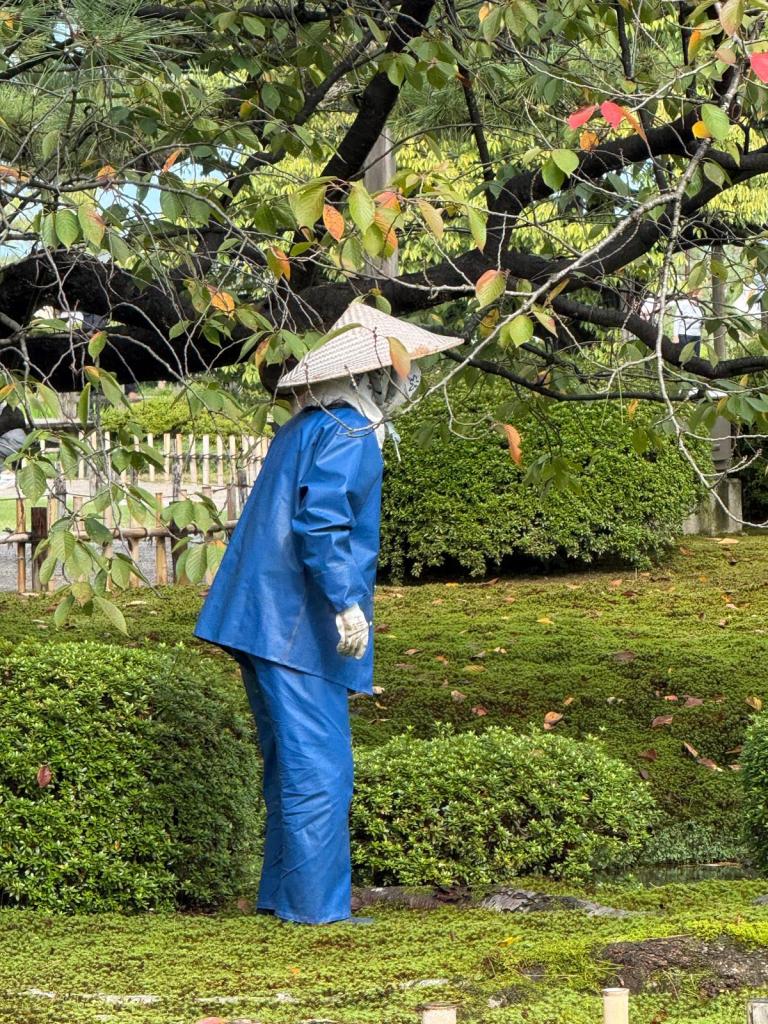


The Kenroku-en Gardens are considered to be one of the three most beautiful gardens in Japan. The two hours we spent wandering through the trees and flowers, over bridges and around water features was worth the visit to Kanazawa on its own. The gardens are set with viewpoints and nooks that allow the wanderer to appreciate its beauty from different aspects and angles. Quite frankly it is beautiful and quite inspiring. Kenroku-en means “Garden of the Six Sublimities” which are spaciousness, seclusion, artificiality, antiquity. abundant water and broad views. According to Chinese landscape theory these are the six essential attributes that make up the perfect garden. And water is the element that draws the wanderer into these gardens. Pools, ponds, statues and stones. Water is diverted from a river by a sophisticated water system constructed in 1632 to feed Kenroku-en’s various streams and ponds including the two main ponds in the garden. We missed the cherry and plum blossoms which adorn the garden in spring but the imagination is a great thing.
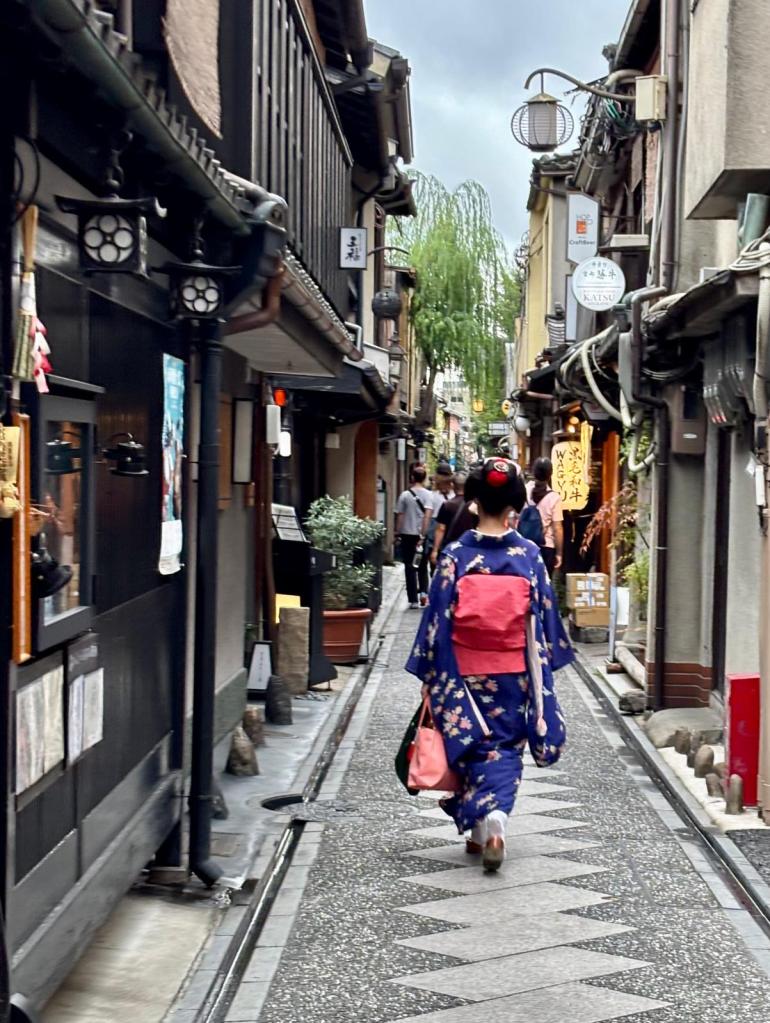
We visited the Higashi Chaya District which is a myriad of lanes and alleys that are full of teahouses or chayas, where the patrons are entertained by geishas performing song and dance. It is also now full of matcha tea and ice-cream shops and sake specialists. Apparently there are over 40,000 sake brands from 150 breweries in Japan. The outlets were full of tourists and locals so the industry appears to be thriving. There is the Nagamachi District which is an old samurai stronghold, Kanazawa Castle near the gardens and, of course the Omicho Market. This market is a puzzle of covered streets and has been the largest fresh food market in Kanazawa since the 1600s. It is mostly seafood and gets very busy at lunchtime as the tourists and locals arrive to dine in the streetside stalls and small restaurants.
If Kanazawa has culture and beauty then Kyoto, our next stop was a bigger version. With nearly 1.5 million people Kyoto is the nineth largest city in Japan and the capital of the Kyoto region on Honshu Island. It is also one of the oldest municipalities being the home of the Emperor from the eighth century until 1869. It is a major tourist destination with tourism the major economic contributor. Kyoto is also known for its craft industries and is the kimono weaving capital of Japan, Its popularity is driven by the beautiful shrines, temples, gardens, Kyoto Tower and the famous Kyoto Imperial Palace. A visit to the palace is a must if you want to understand how Japan’s early imperial rulers lived and governed. It is a walk through imperial history with ancient Japanese artwork on the walls, an insight into how the Emperor conducted foreign affairs and the royal living conditions.

A must see in Kyoto is Kinkaku-ji or the Golden Temple which is breathtaking, The temple was the retirement villa of the Shogun Yoshimitsu until his death in 1408 and is now a Zen Temple and major tourist attraction. The top two floors are completely covered in gold leaf. Kinkaku-ji was the inspiration for the similarly named Ginkaku-ji (Silver Pavilion), built by Yoshimitsu’s grandson, Ashikaga Yoshimasa, on the other side of the city a few decades later. The temple overlooks a large pond and impressive gardens although the current building is not the original. After several fires over the years it was rebuilt in 1950.
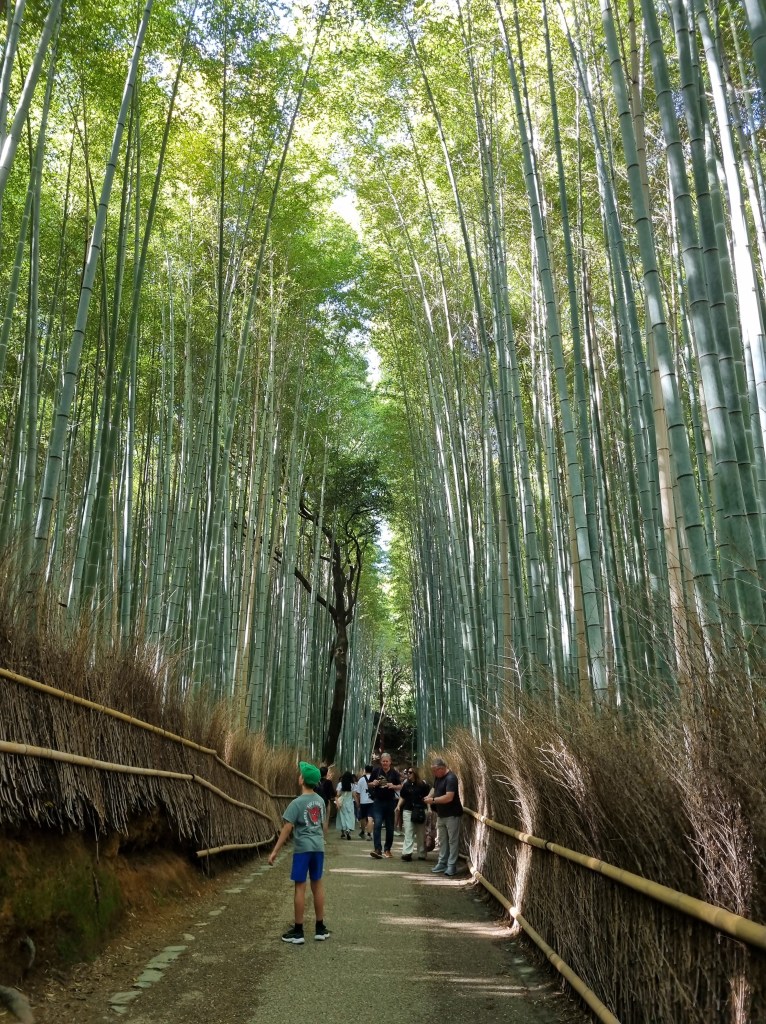
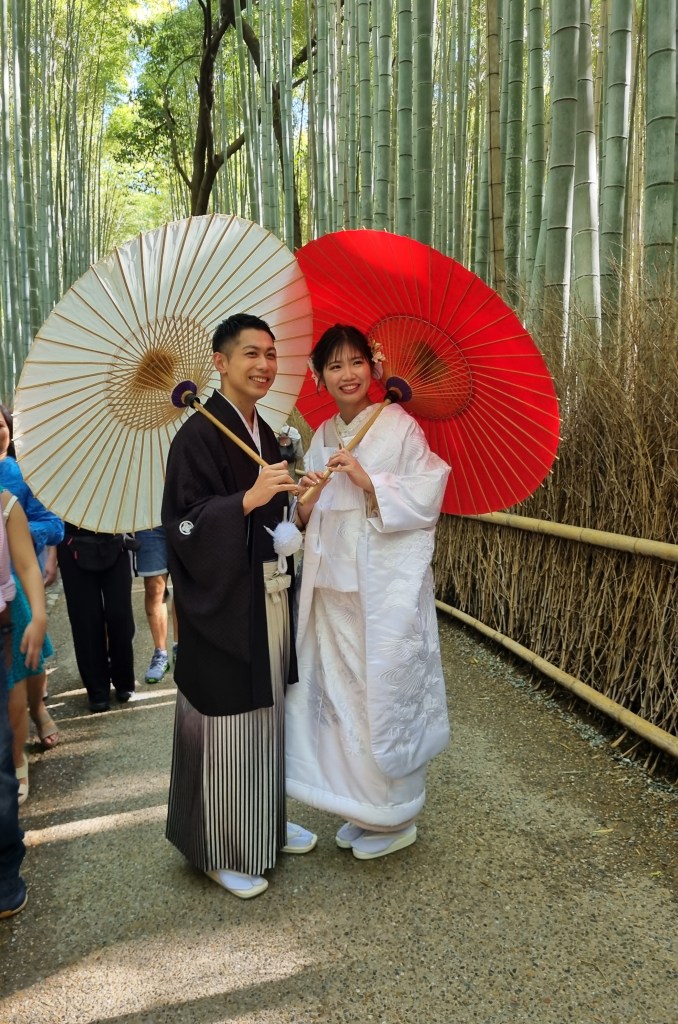
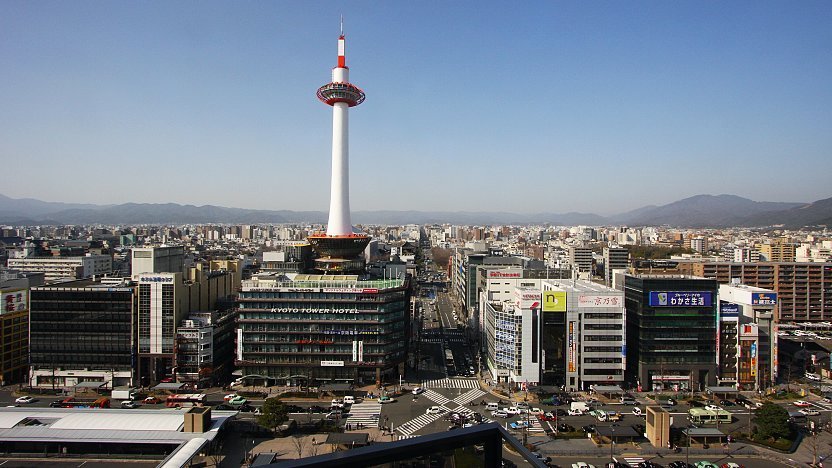
Visit Kyoto Tower for an elevated view of the city. The viewing platform is over a hundred metres high and affords a spectacular view of the city. Inside are numerous restaurants and a hotel if you wish to stay on. We spent one morning at Arashiyama Bamboo Forest. The bamboo grove is not immense but walking through the green tinged light of the tall bamboo growth is both inspiring and calming. The path was dotted with couples in full wedding dress being photographed in the dappled light. Unique wedding photos no doubt. A visit to Iwatayama Monkey Park is worth the effort of the 20 minute hike up the mountain. Over 120 Japanese Macaques or snow monkeys make their home here but have really become a tourist attraction. The site is very well looked after by park attendants who call out any bad behaviour. Human that is. PS “Don’t stare into the monkeys eyes”.
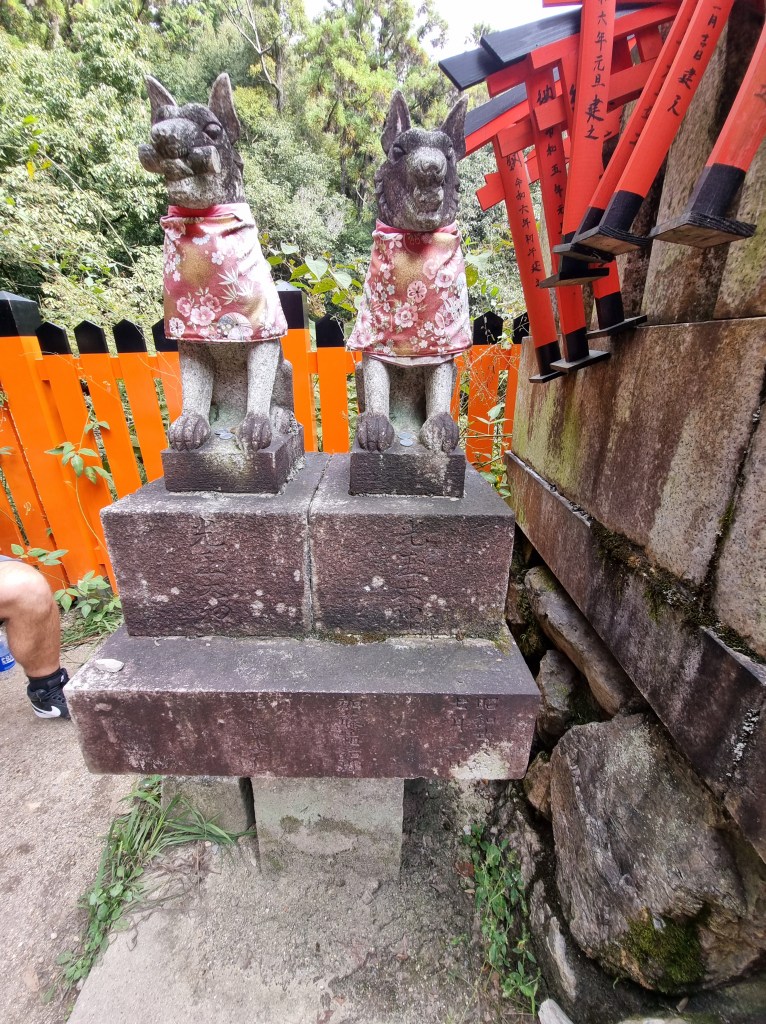
A highlight in Kyoto was the hike up Mt Fushima through the 1000 Torii gates. Fushimi Inari Shrine is an important Shinto shrine in southern Kyoto. It is famous for its thousands of vermilion torii gates, which hover over a network of trails leading up the mountain. The trails pass through the wooded forest of the sacred Mount Inari, which stands at 233 meters and belongs to the shrine grounds. The walk uphill is steep and quite demanding for 40 minutes but the arrival at the top is worth it. There are a series of interesting small wooden shrines but the view over Kyoto is the gift. Fushimi Inari is the most important of several thousands of shrines dedicated to Inari, the Shinto god of rice. Foxes are thought to be Inari’s messengers and there are many fox statues across the shrine grounds. We got a little lost on the way down because Scout knew a quicker way. It turned out to be a bonus as we ended up walking through a beautiful Kyoto neighbourhood. Nothing like experiencing the local flavour.

For those of my generation the horrors of atomic bombs dropped on the Japanese cities of Hiroshima on 6th August 1945 and Nagasaki three days later to end the Second World War in the Pacific are well known. Our grandfathers and, in some cases, fathers fought in the Pacific Theatre. We grew up in the 1960s with the nuclear bomb escalations of the Cold War. But a visit to Hiroshima and the Peace Park and Memorial Museum really brings home the consequences of using these weapons on a large civilian population. It is laid out for all to see in the museum and park. Arguments will go back and forth as to the rights or wrongs of the act but there is no argument as to the effect on Hiroshima and its people. The Hiroshima Peace Memorial Park was created in April 1954 and is sited on the fields of what was left of the leveled downtown commercial and residential district. Seventy one years later the park and museum are surrounded by hotels, restaurants and shopping areas which make staying in Hiroshima a very pleasant experience but the sight of the lone bombed out Hiroshima Prefectural building and its dome, now known as the A-Bomb dome in the park is the constant reminder of what went before. The bomb affected the lives of 140,000 men, women and children including those killed in the blast, those whose health suffered and who died of direct injuries and radiation induced cancer in later years.

Particularly heart rending is the Children’s Peace Monument, dedicated to the estimated 38,000 children who died in the Hiroshima and Nagasaki bombings. The statue is based on the true story of Sadako Sasaki , a young girl and hibakusha who died from radiation from the bomb in 1955 at the age of 12.. She is revered for folding over 1,000 paper cranes inspired by a Japanese legend. Children from around the world still make paper cranes and send them to the memorial. There is also the Memorial Cenotaph which contains the names of all those who were killed by the bomb. The Cenotaph frames the Peace Flame and the A-Bomb dome.
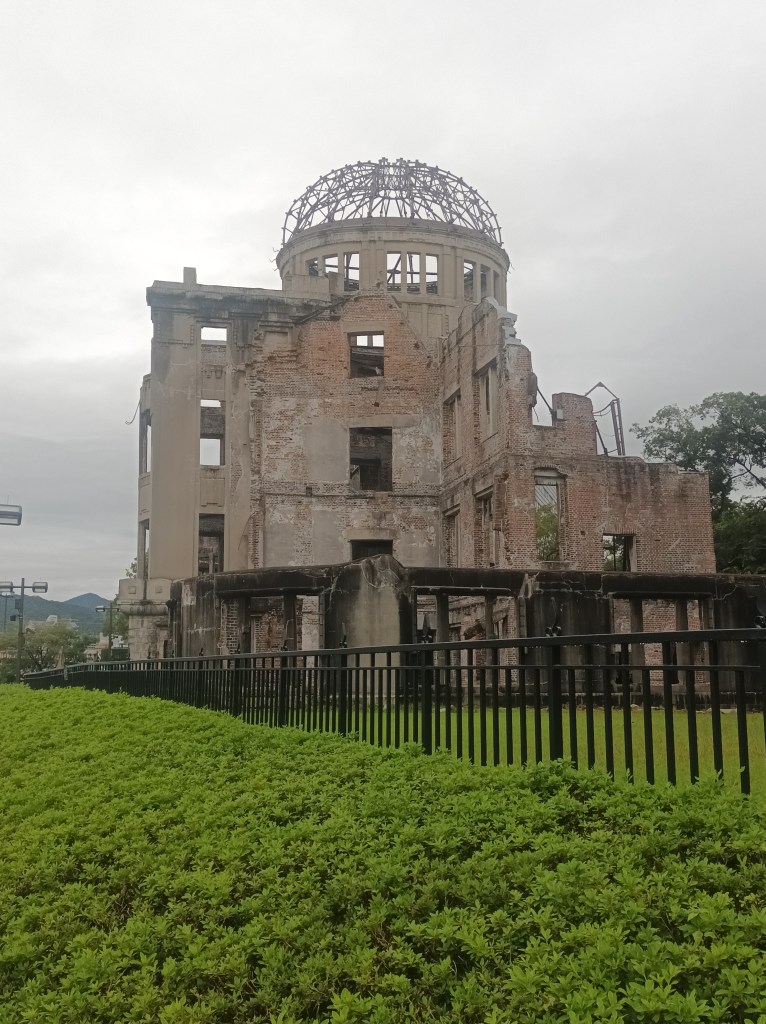


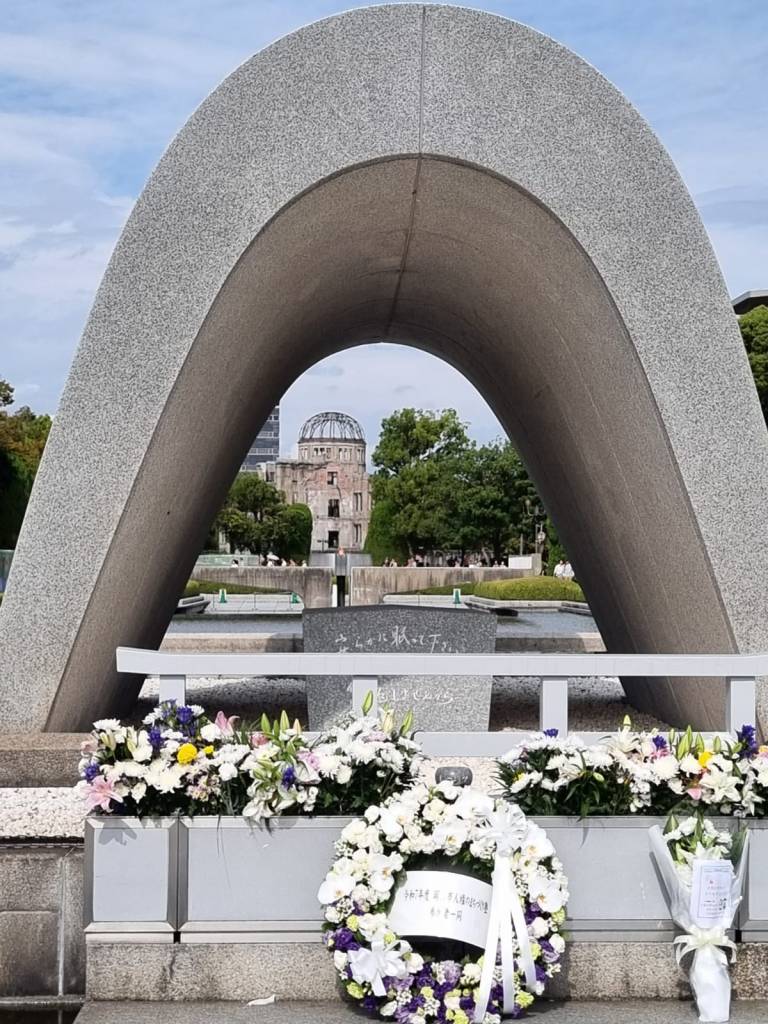
Hiroshima is now an attractive city with Hiroshima Castle a must to visit in Chuo park. Built in 1589 by the local warlord Mori Teramuto, the castle was once the actual and economic centre of the city. It was, of course destroyed by the bomb but has been rebuilt with much of the inner castle reconstructed with original materials and scope. But The Peace Park Memorial and Museum are the centre of the city now and a constant reminder of what can happen when countries are in conflict and politicians under duress. Modern events would suggest we are not really listening.


 Travels With Mr Gato Downunder
Dear Margaret and Mike:–
Another wonderful adventure story Mike to add to the many others – thank you so much as I always and look forward and learn so much about your travels with Mr Gato. Japan is certainly a fascinating place with their people so disciplined.
The weather has been amazing – very up and down here in Sydney and again today, so I have been trying to get some office work done including Alexandria’s AGM yesterday via teleconference.
I am catching up with friends tomorrow morning for coffee, then dinner and bridge at a friends home in the evening just nearby at Darling Point with a monthly group of 12 friends at the golf club on Friday for bridge and lunch then another AGM Friday evening and catching up with the families on the weekend. I am so fortunate to have such a busy life, which helps me so much with my sadness and the loss of my darling Andrew. How I miss him.
Keep well and enjoy each other as we did, and I look forward to chatting in the near future.
With my love.
Thea.
Sent from my iPad
>
LikeLike