

The rainforest drips and glows with green the tree-frog croaks his far off song His voice is stillness, moss and rain drunk from the forest ages long
by Judith Wright – Australian poet and environmentalist.
The people of Costa Rica are immensely proud of the biodiversity that their country is blessed with and their record of preservation. So much so that they have segued this natural wonderland into a thriving eco-tourism industry. While Costa Rica is only 51,000 square kms (roughly the size of Denmark or Switzerland) it packs a lot of natural environmental punch. Its west coast is on the Pacific Ocean , its east coast the Caribbean Sea and in between is a picture perfect mix of rugged rainforest, volcanoes, rivers and waterfalls. There is a strong commitment to its national parks and the wildlife within. All this is really a consequence of Costa Rica’s reputation as Central Americas most stable and democratic country with a good human rights record and high standard of education. The literacy rate is as high as any in the western world and the country boasts four universities. After some political argy bargy and animosity with Nicaragua leading up to the 1948 elections and an attempted coup d’etat common sense prevailed and a new constitution was written in 1949 which provided for a fair legislature and judicial system and an independent electoral body. Importantly the constitution abolished the country’s army, gave women the right to vote, and provided social, economic, and educational guarantees. Costa Rica is one of the few catholic countries that has enshrined same sex marriage and while it may be a step too far the abortion debate is at least on the table. All this has led to a country that has stayed relatively peaceful alongside its crime racked neighbours and allowed the progress from an agricultural based economy to that lead by services and technology. The relative safety for tourists is obviously an important part of this advancement.

Central highlands and volcanoes
Santa Rosa de Pocosol and Juanilama
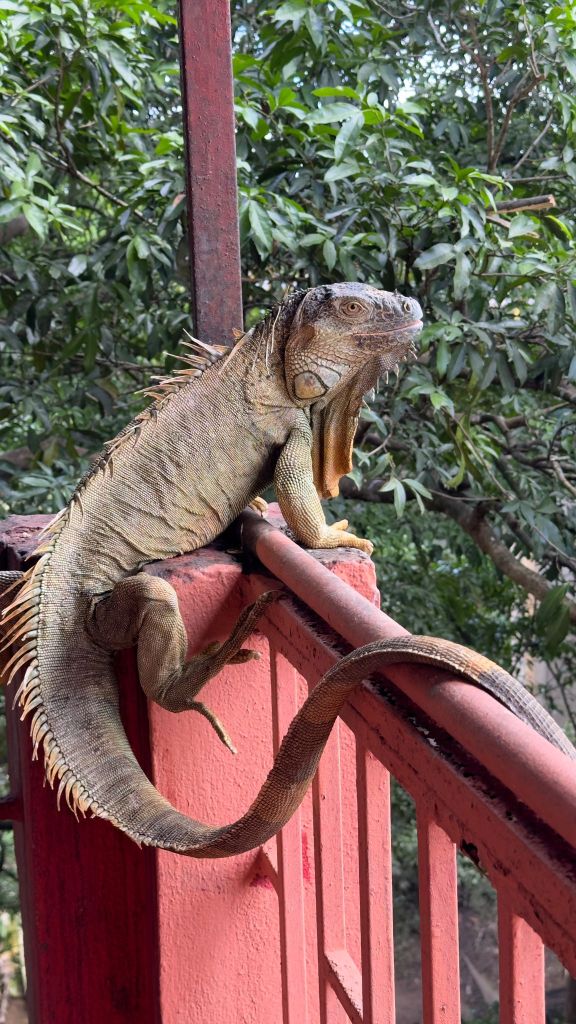
In the late 1990s in an endeavour to promote family groups into rural areas and push economic progress the Government of the day purchased 500 hectares of land in the central north of the country and settled 80 families there. There were some financial rules set to ensure deserving families were selected and the groups were provided with rudimentary shelter and tools and told “to make a go of it”. Some 30 years later the land has been transformed into Juanilama, a thriving eco-agricultural community of around 200 people with relatively modern housing and schools. A sort of modern day agricultural commune without the dreadlocks and bullshit. After leaving San Jose we had stopped at nearby Santa Rosa de Pocosol, the nearest town, for a quick tourist stop ie buy some stuff, peruse the trinket shops and photograph the iguanas then ended our journey some four miles later at Juanilama for lunch and a homestay visit.
About five years back an enterprising community leader floated the idea of promoting tourism in the community to supplement the income from cattle raising, milk production and cropping – cassava, coffee, plantain and pineapple. The families that have embraced this new enterprise offer a farm stay, farm tours, rain forest walks and a look into the artisanal production of coffee, chocolate and cheese making. Scout and I stayed in the home of Don Carlos and his about to have a baby in two weeks wife, Elevette. A lovely couple with no English we struggled a little to communicate but with the judicious use of Google Translate (thanks modern technology) we got some of their backstory. The nearby houses, also homestays, for our group included Don Carlos’s sister and sister-in-law. This could be described as a matriarchal society as the absence of men (either gone or working away) was apparent and the women seemed well in charge. We enjoyed a two hour forest walk and a substantial evening meal of, you guessed it rice and beans supplemented by some delicious chicken stew, roasted plantain and fried cassava and cheese balls. The thing here was for our group to muck in and assist with food preparation including grating cassava, rolling out tacos and preparing vegetables – the grunt work in other words. But we enjoyed the meal and conviviality. Josh, Sidra and I also rose early the next morning and were found at 6.30 am at Carlas milking cows and making cheese. Sort of. Really we pulled a few cow boobs and stirred and drained the resultant curds and whey. More importantly we enjoyed a delicious breakfast of eggs, fried cheese, roasted plantain and a warm and delicious concoction of milk, ground maize and banana along with a cup of strong Costa Rican coffee.


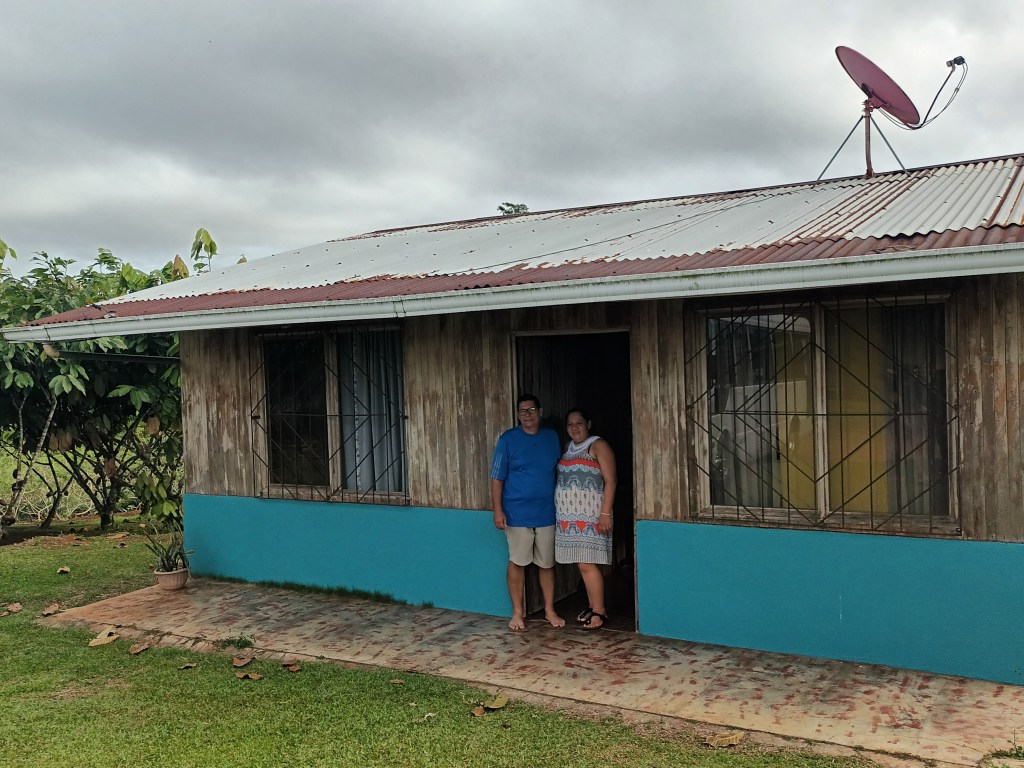
Juanilama scenes – a rural street, off to school and Don Carlos and Elevette
This was no 50 bay herringbone shed. The five cows are milked sitting on a stool in a concrete patch out the back of the outdoor kitchen. Carla’s husband rises at 5 am to milk the cows then heads off at 7 am to his day job. Carla and her neighbours then gather for cheese making and breakfast and its all hands in when a tourist group comes knocking. It is a hard existence but the smiles on the faces and the chat suggest a happy one. This is community living and everyone is part of the game. If you are not working you are looking after nephews and nieces or grandchildren and it all seems to work in a quiet rural surround dotted with waterfalls, rainforest and wildlife.

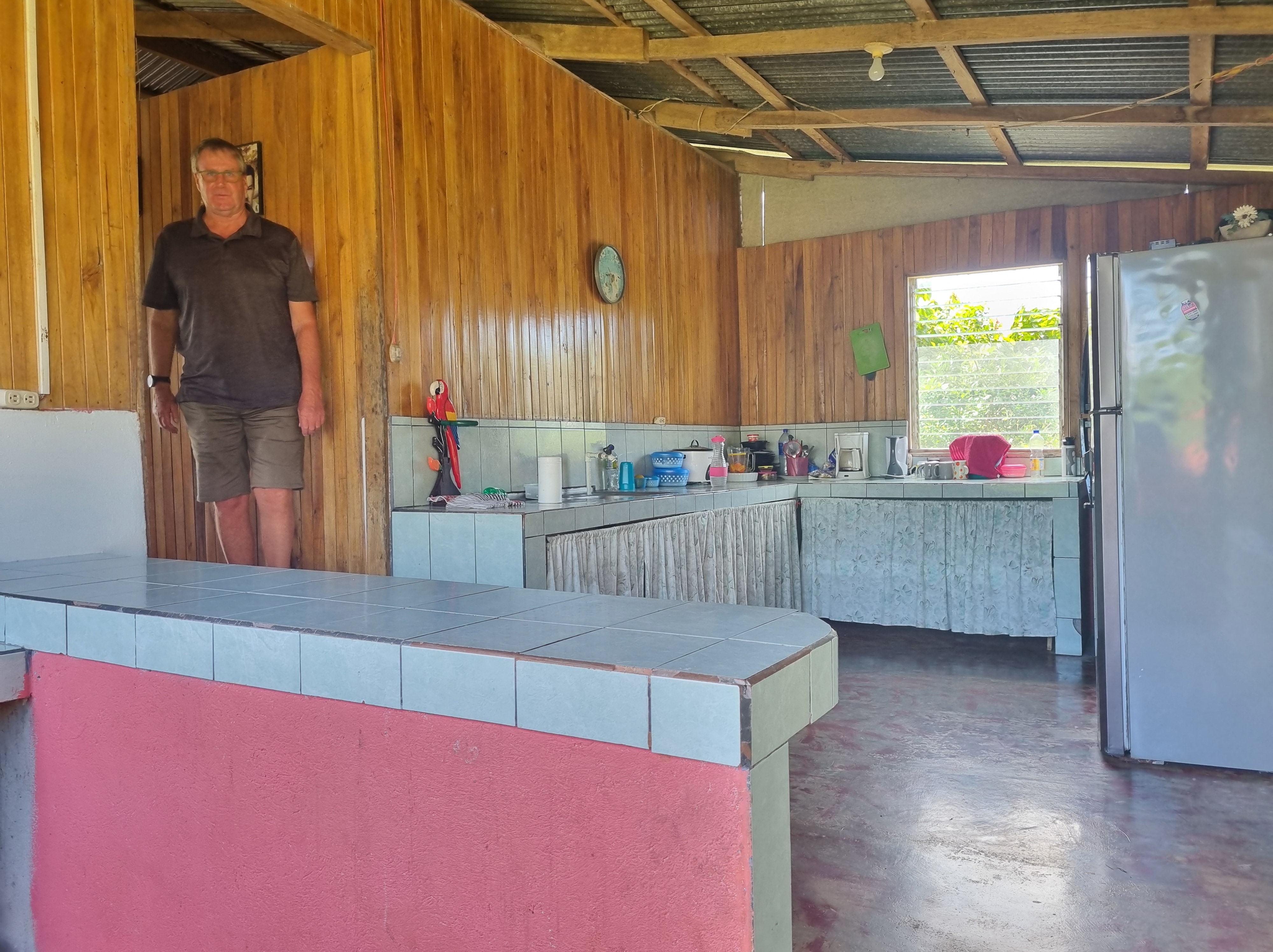

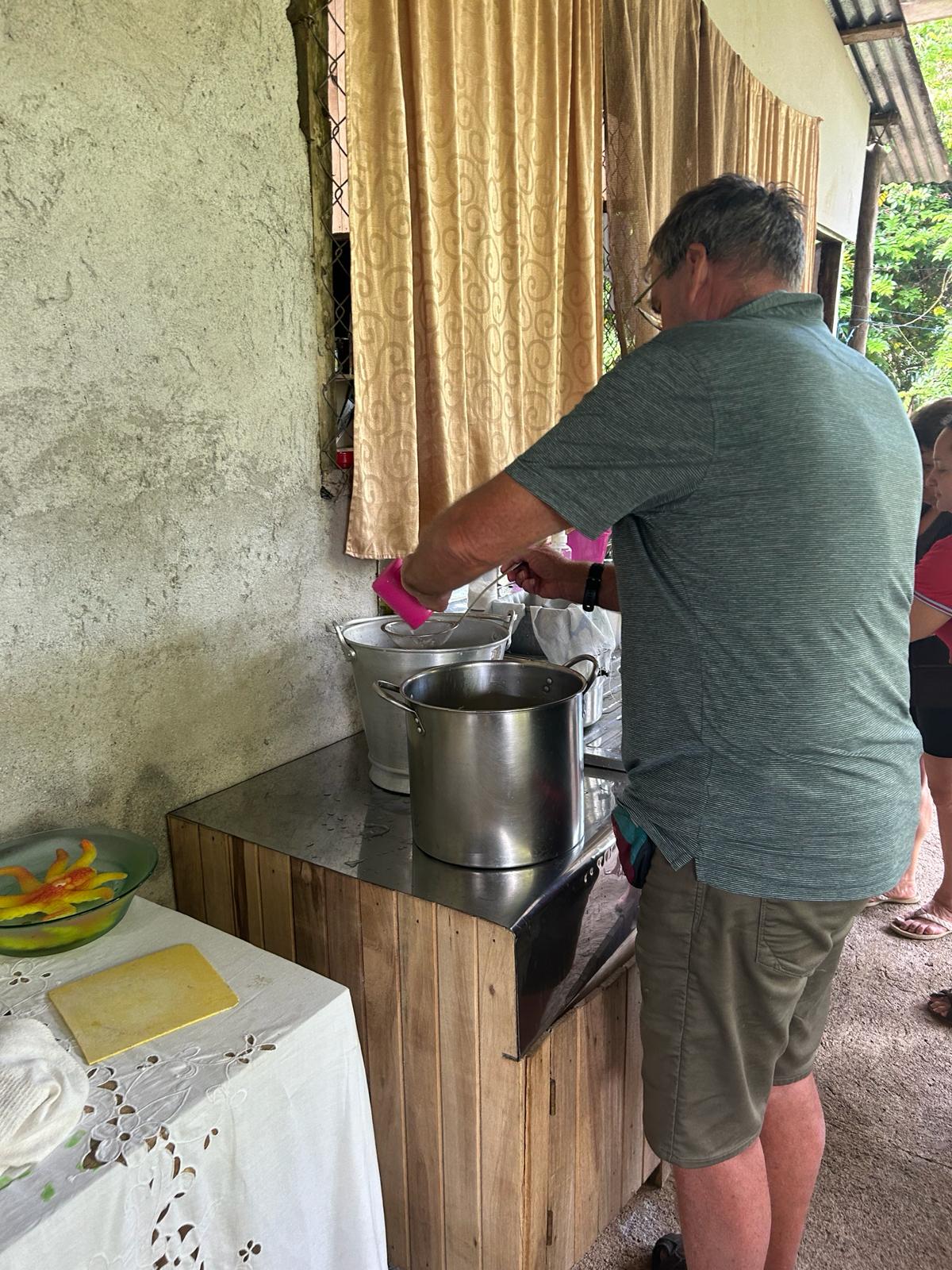
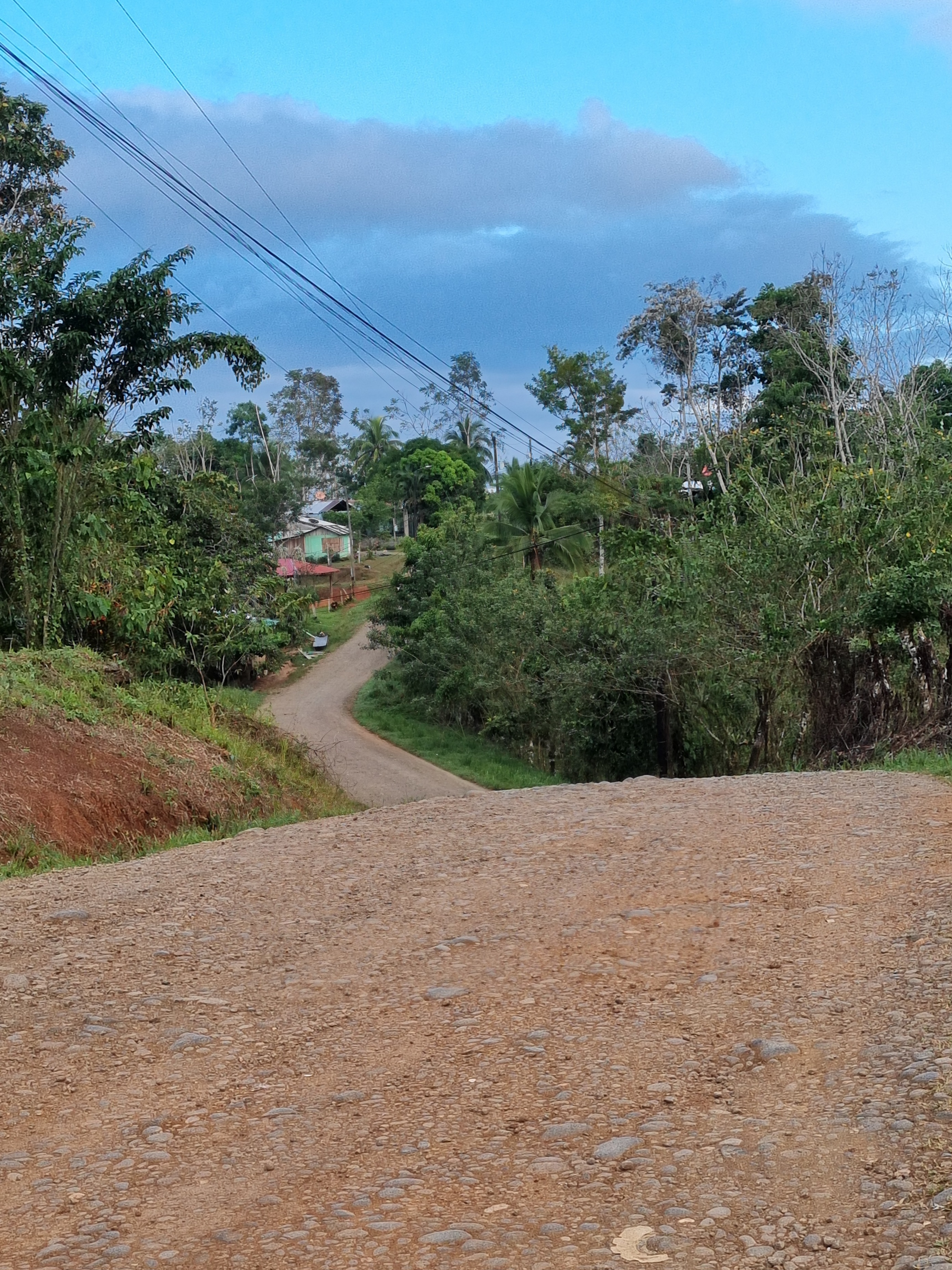
Juan and I on the patio, in the outdoor kitchen, any NZer can milk a cow, making cheese and Juanilama scene
The homestay could be seen as contrived and lets be honest it is a touristy money maker but it was fun. And we got close to a group of genuine people working hard to make a living and improve their lives in a country that at least encourages enterprise. We have fond memories and the Juanilamans opened up their homes to allow us to experience Costa Rican rural existence. This was a unique experience for us. More power to them I say. Next we travel to the town of La Fortuna then up and up to Monteverde to spend time walking the country, observing wildlife and getting misty eyed in the rainforest. Howler monkeys here we come!

 Travels With Mr Gato Downunder