
Living in a land down under
Where women glow and men plunder (yeah)
Can’t you hear, can’t you hear the thunder? (Thunder)
You better-better run, you better take cover
Written by Colin Hay and and Ron Strykert – Men at Work
The song “Downunder” is an Aussie classic although interestingly owes some of its success to the 70 year old song “Kookaburra Sits in an Old Gumtree”. Remember that one. The children’s nursery rhyme was written by Melbourne schoolteacher Marion Sinclair in 1934 for a Girl Guides convention. Well it seems an Aussie court back a few years in 2010 decided that the flute riff from “Kookaburra” and “Downunder” were remarkably similar. Obviously my musical ear is a little off as I can’t seem to reconcile the 1980s pop icon’ quavers and crochets to a children’s nursery rhyme but there you are. All is well though as the group have agreed to pay a portion of the royalties to Larrikan Music who own the rights to “Kookaburra”. Larrikin Music – I know but you’ll understand if you live here. Anyway we are back “Downunder”
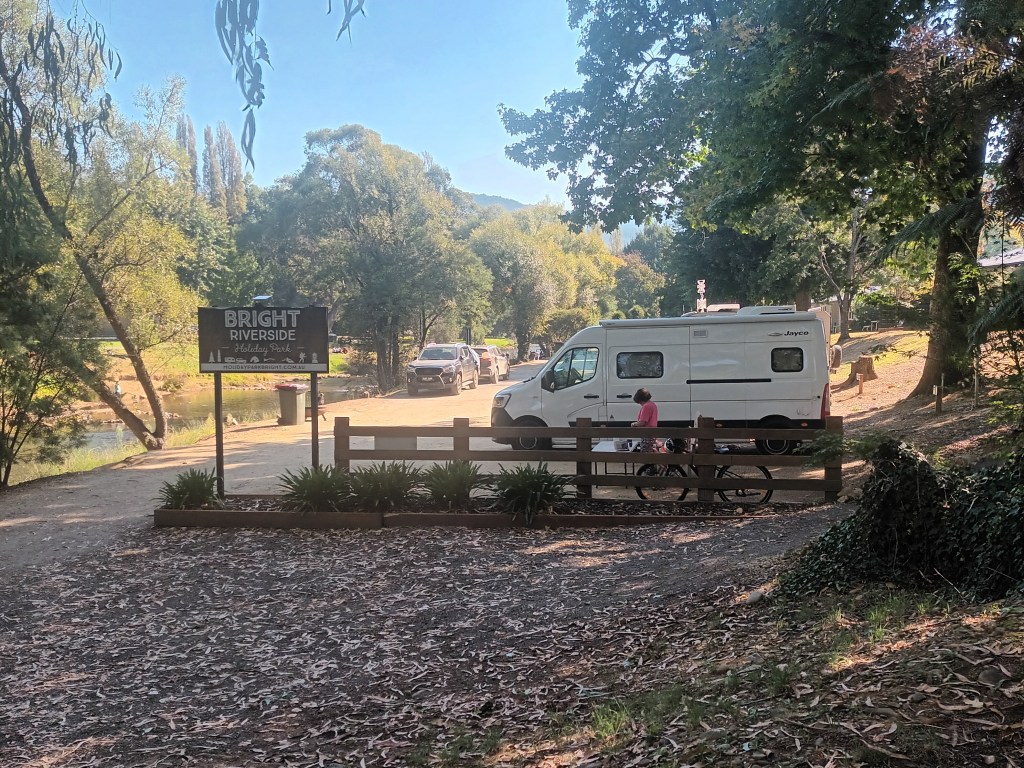
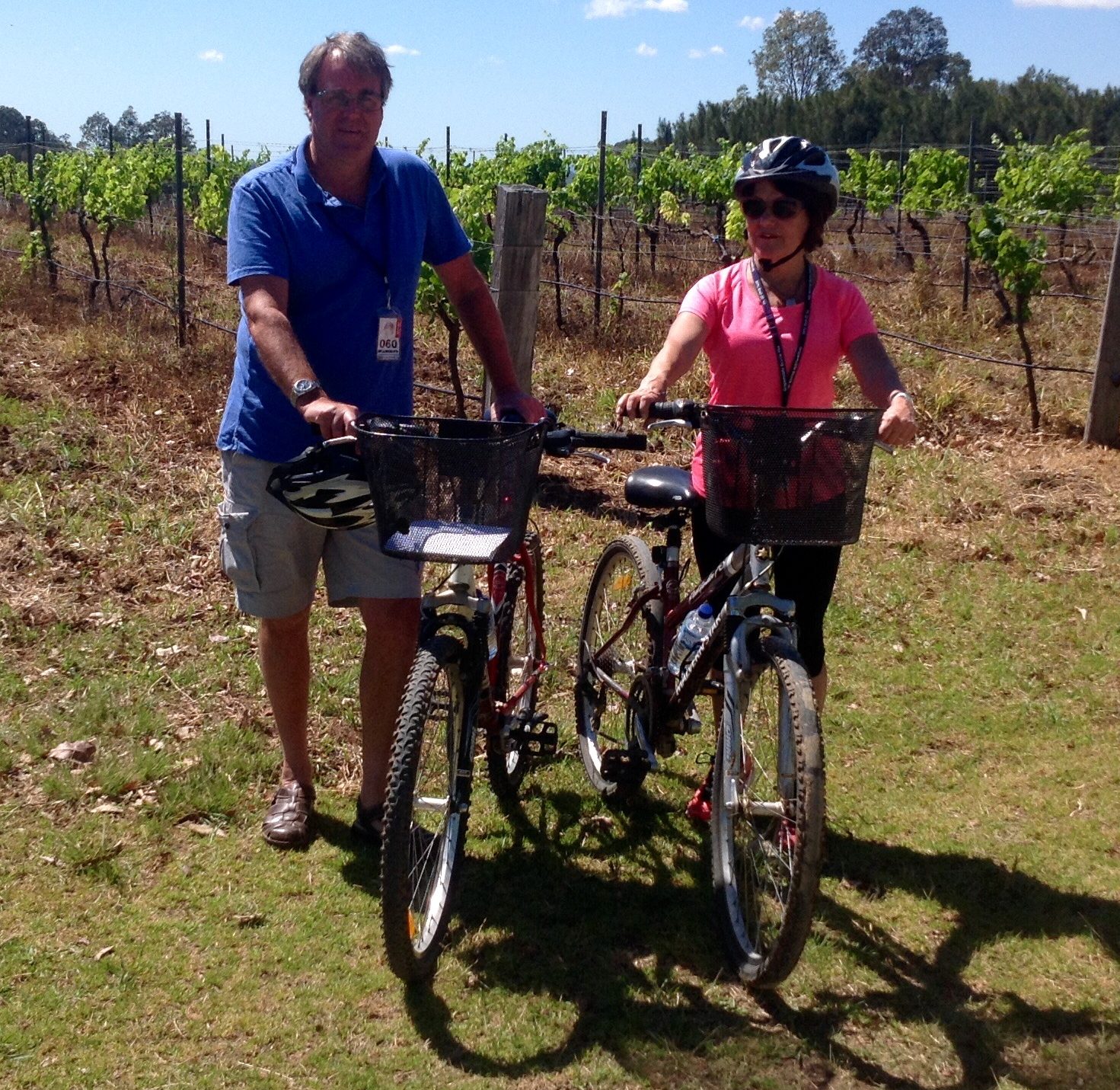
Bright Riverside campground- Scout just back from a bike ride
We are back in Australia and after a nice visit with the grandchildren are on the road again. Sydney or at least Manly where Brigette and Ralph live is NOT car user friendly. They don’t have off-street parking so we left the van while we were overseas in a shady side street some way away where they have friends. It turned out to be not so friendly as someone obviously took exception to a campervan taking a spot in their overcrowded street and took a swipe at our side mirror. Three hundred and fifty bucks later we are off. After stops in Woolongong to visit old Auckland friends (thanks for the hospitality Jackie and Terry), Jugiong, Bright and Bonnie Doon (thanks Jasna and Alan) and Minyip we settled into Brighton Beach Campground in Adelaide for a couple of days. Quick word on Bright. This is a tourist town north of Melbourne which caters for winter skiing on Mt Hotham and summer hiking and biking. The Victorian mountain bike champs were on the weekend we were there. Bright has a reputation for a most colourful autumn and although turning when we were there it was a little early. And let me tell you about Minyip. The Minyip Progressive Assn. has set up a powered camping spot ($10 overnight) with hot showers and toilets on the edge of town alongside some wetlands and walking trails – also community projects. So a lovely outlook from the park. This is a small service town 300 kms north west of Melbourne in the Victorian wheatbelt. Its claim to fame is the setting for episodes of “the Flying Doctors” TV series. Regrettably for all its hard work and forward thinking the town appears to be slowly dying with several empty boarded up shopfronts. Apparently Minyip means “ashes” in the local First nations peoples language. Sort of self fulfilling. It seems to be a sad pattern for rural Australia (probably the world). So come on all you travelers – a night in Minyip wouldn’t hurt.
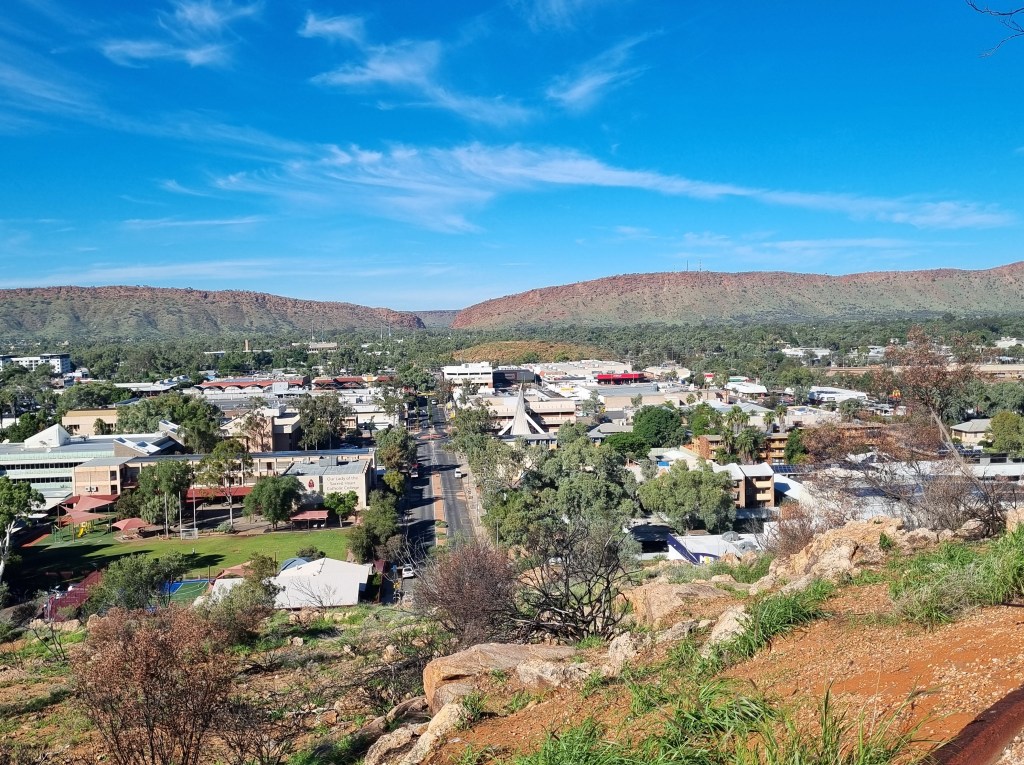
Alice Springs town centre
Our plan was to drive up the middle of Australia to the Red Centre and spend time exploring Uluru, Kings Canyon and Alice Springs. Unless you have been in a tunnel you will know that Alice is getting some pretty bad press at the moment. So it was with a little bit of trepidation that we started north from Adelaide. We shouldn’t have worried. Alice Springs or Mpartnwe, it turns out is a beautiful town of 28,000 people with around 20% Aboriginal at the foot of the MacDonnell Ranges. The town centre is modern and active with people from all cultures going about their business. We walked through the town and enjoyed its parkland alongside the Todd River. The river was effectively dry but we were told had flowed strong and steady up until then from the recent rains. In fact the whole area was an unexpected lush green alongside the red dirt and towering russet coloured hills that bound the south edge of town. There is no doubt there are problems in the town and the heavy police and security guard presence attests to this. Particularly around the alcohol outlets with alcohol purchase quite restricted both in days open and purchase levels. From talking to locals problems are deep-rooted and follow many years of inaction but the will to improve certainly seems to be there from all parties. Our experience, though, was extremely positive and enjoyable. We visited the quite beautiful Jessies and Emily’s Gaps for a swim in the natural pools and took in some history. Alice is very close the centre of the country and is 1,500 kms from both Darwin and Adelaide. The town itself originated in 1872 as part of the Overland Telegraph Line from Adelaide to Darwin with the intention of then running a cable to Java to link Australia to the world. The OTL followed the explorer John Stuart’s route from south to north with Alice Springs being named after the wife of Sir Charles Todd, the architect of the OTL
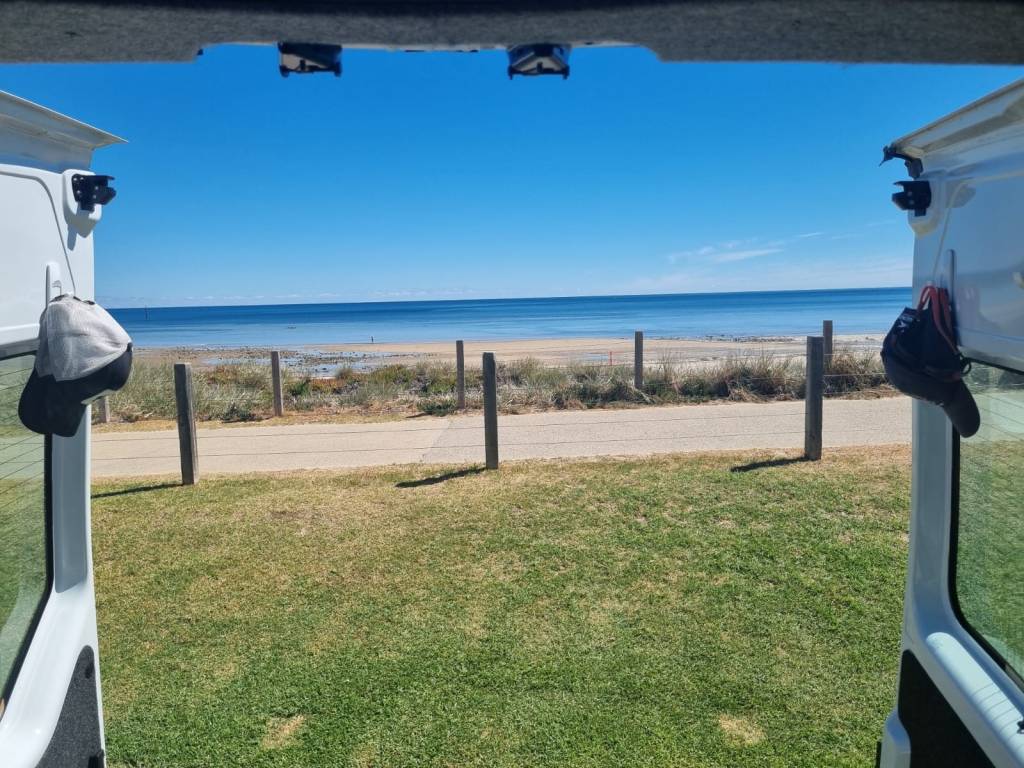


Camping at Brighton Beach, Adelaide, Jessies Gap and Emilys Gap at Alice Springs
But firstly Coober Pedy and Uluru. Coober Pedy is often referred to as the opal capital of the world and sits atop a mass of diggings and mines in S.A. some 840 kms north of Adelaide. It really is just a main street and a few buildings amongst the dirt and mounds of tailings from the opal mines. The first opal was discovered 110 years ago and the industry is still going strong. The landscape is effectively desert on sandstone with little rainfall and temperatures up to 40C in the summer. Because of the high temperatures many of the inhabitants live in underground homes dug down and into the side of the rock where it is cool. Interestingly the town name is thought to come from the local Kokatha language “guba pidi” or “white man’s holes”. Take that whichever way you want. There are apparently over 250,000 mine shafts in the area with the largest opal mined a 3.5kg beauty found in 1956. A large part of the town’s revenue is now based on tourism. Worth a visit but not too long!

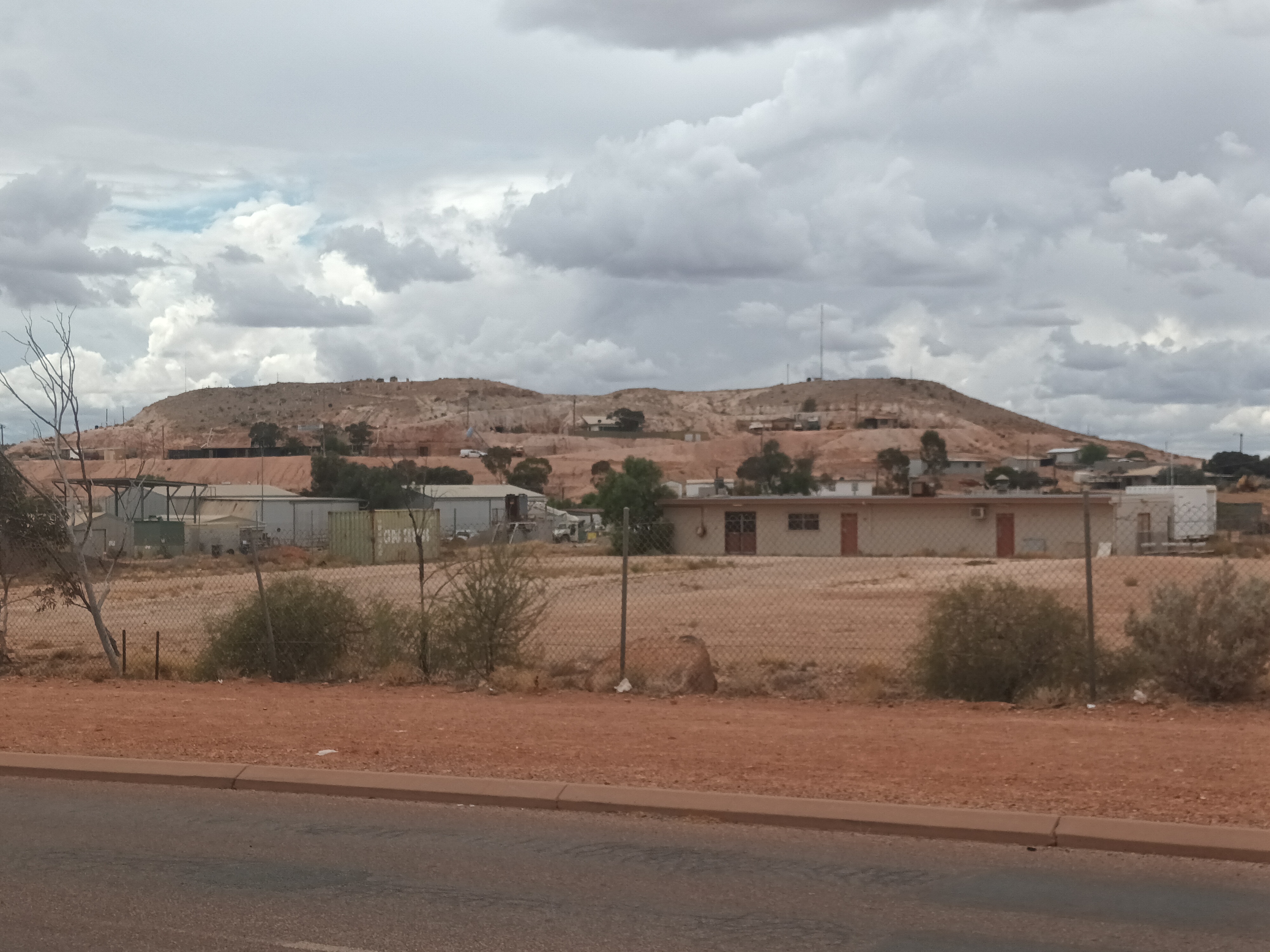
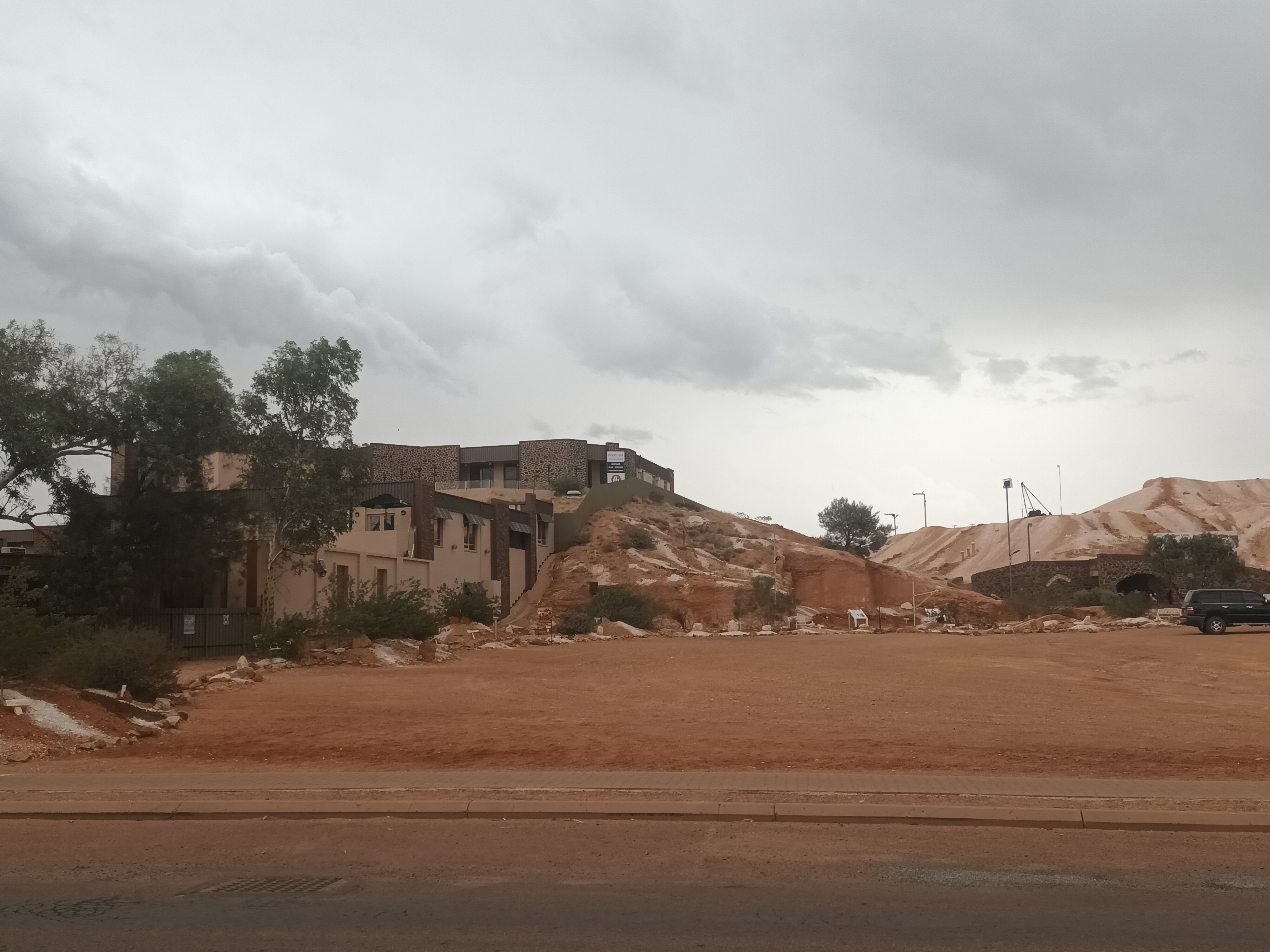
Coober Pedy Opal Mine and outskirts from the main street, Coober Pedy Opal Mine and hotel
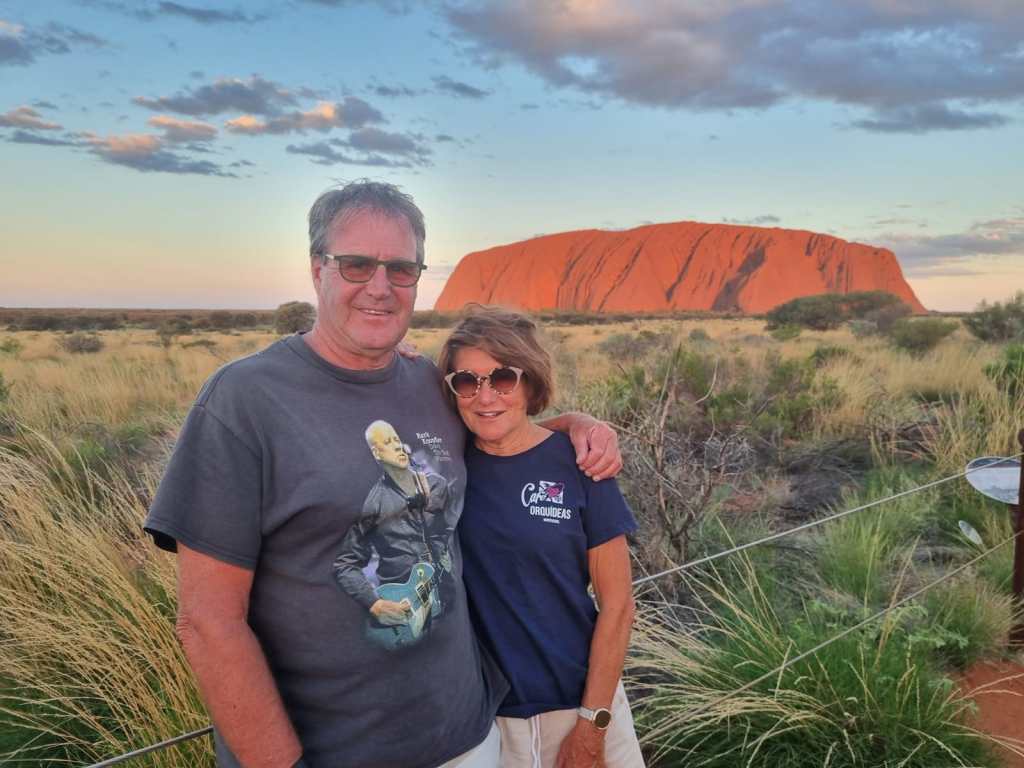
Uluru near sunset
Uluru and nearby King’s Canyon though are another thing altogether. We stayed a few days in Ayer’s Rock Resort at Yulara some 18kms from Uluru itself in Kata Tjuta National Park. Uluru is sacred to the local Anangu people and is now designated a UNESCO World Heritage site. It is really a huge sandstone outcropping formed from sediment flattened and hardened while under the sea over 500 million years ago. The sea is no longer about but the emergent rock now stands 348m tall, (863m above sea level) and is 9.4km around. The red colouring is derived from the iron oxide in the sandstone. It has enormous cultural significance to the local Anangu people who are very diligent in ensuring visitors are respectful of its history and cultural meaning. Nevertheless tourism thrives in the area which includes Kata Tjuta or the Olgas – another large rock outcropping some 25kms from Uluru. It is hard to describe the significance to a visitor to the area other than to say there is a natural beauty and feeling that is unique to the place. Uluru has a way of changing colour from brown to red to golden brown as the sun moves from sunrise to sunset across the day and different times of the year. We biked around the perimeter and enjoyed the ability to get close in to waterholes and crevices in the side of the rock then hiked the three hour “Valley of the Winds” walk across Kata Tjuta. The heat is significant and the walk is often restricted to hours before 9.30am to stop the usual fools walking in the extreme heat of midday. Put this visit on your bucket list. You will not be disappointed.
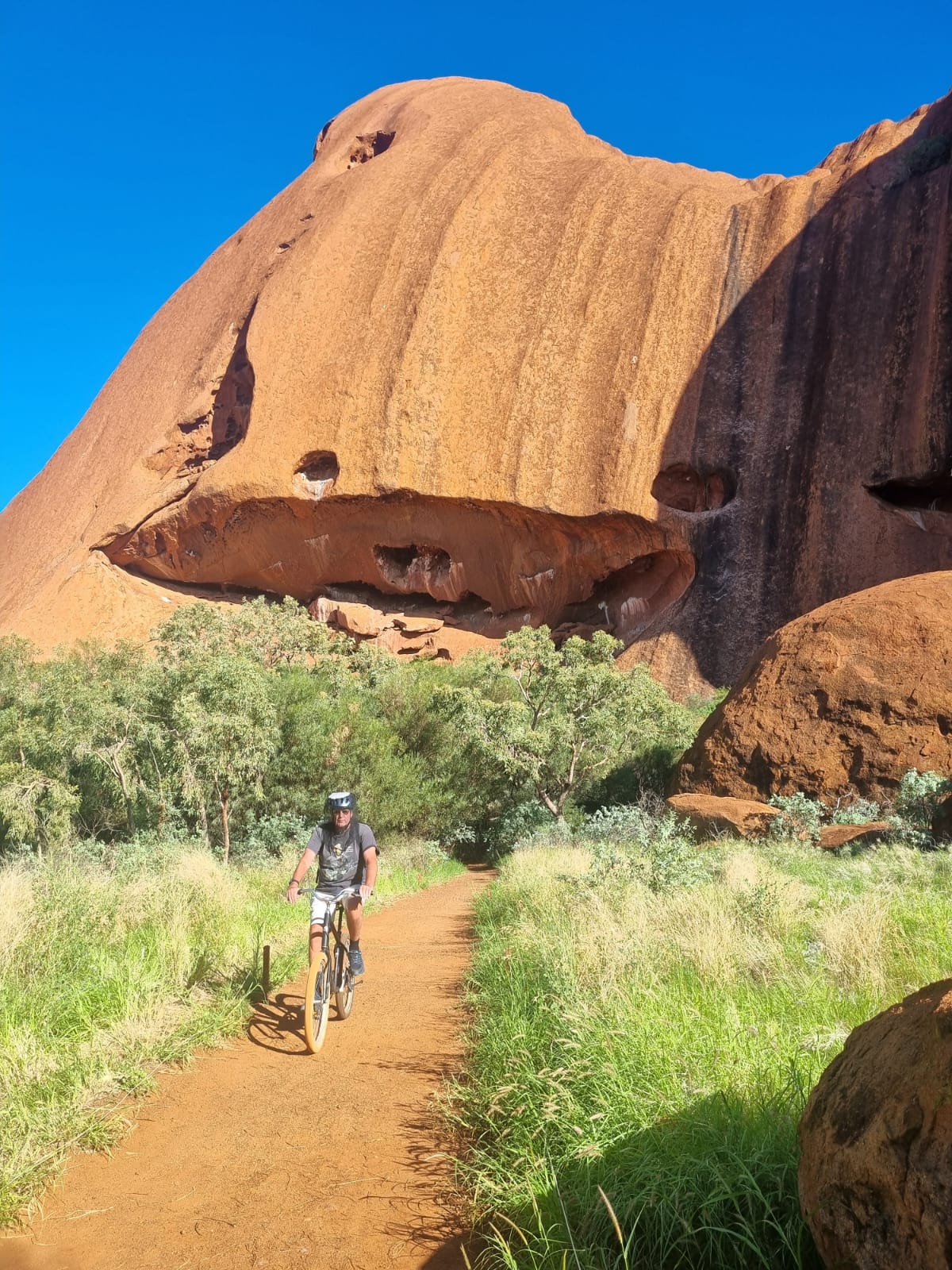

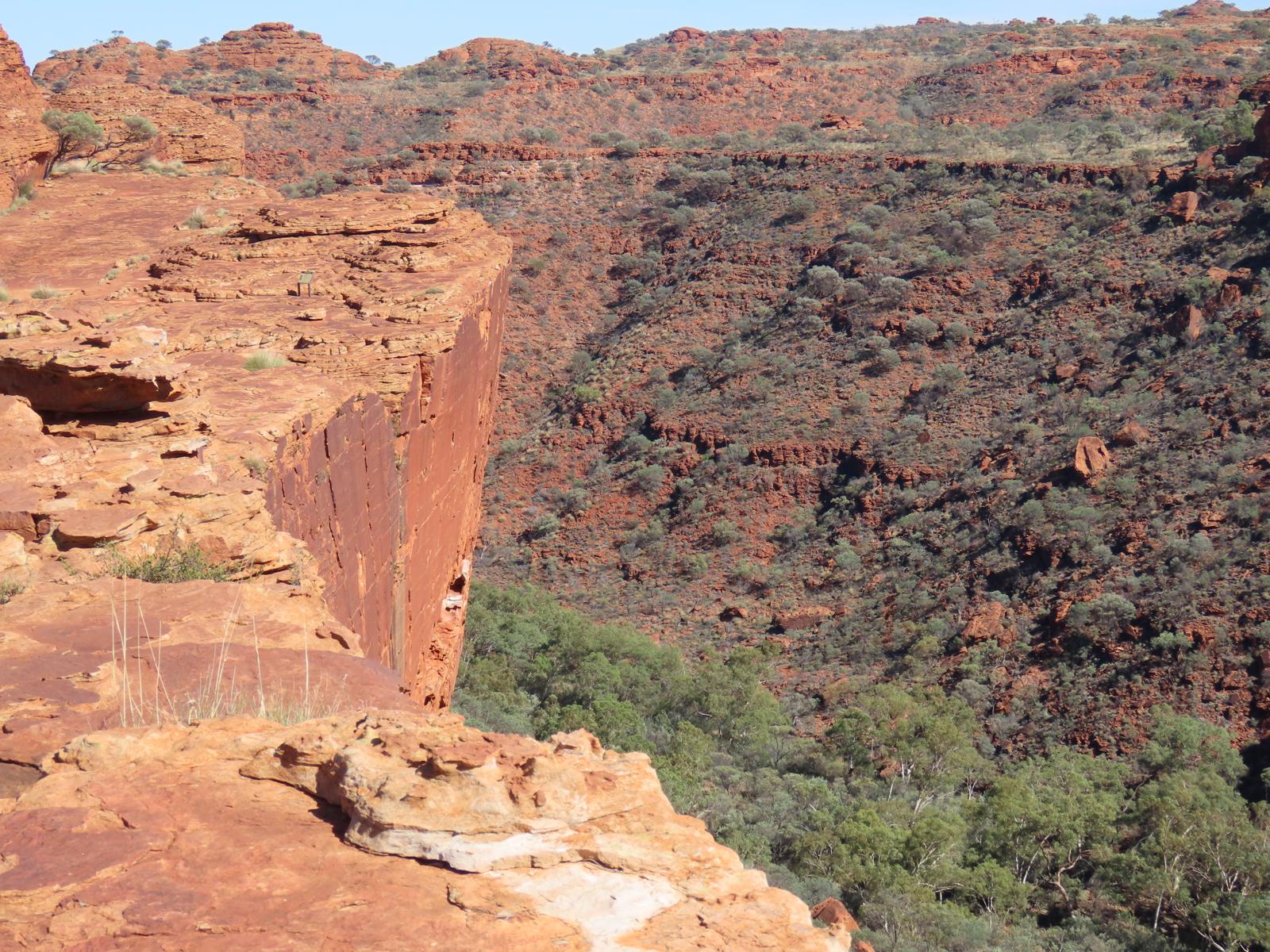
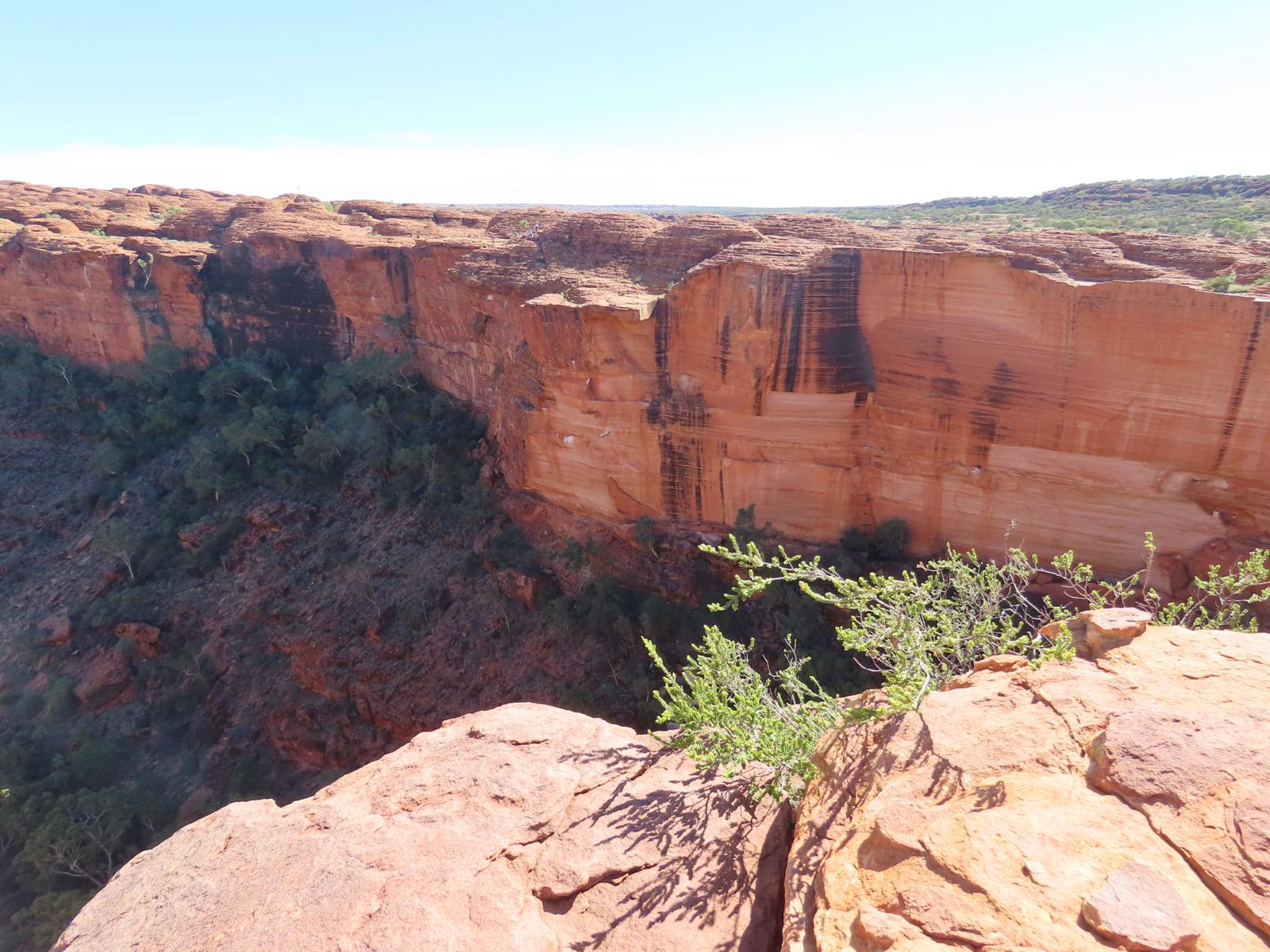
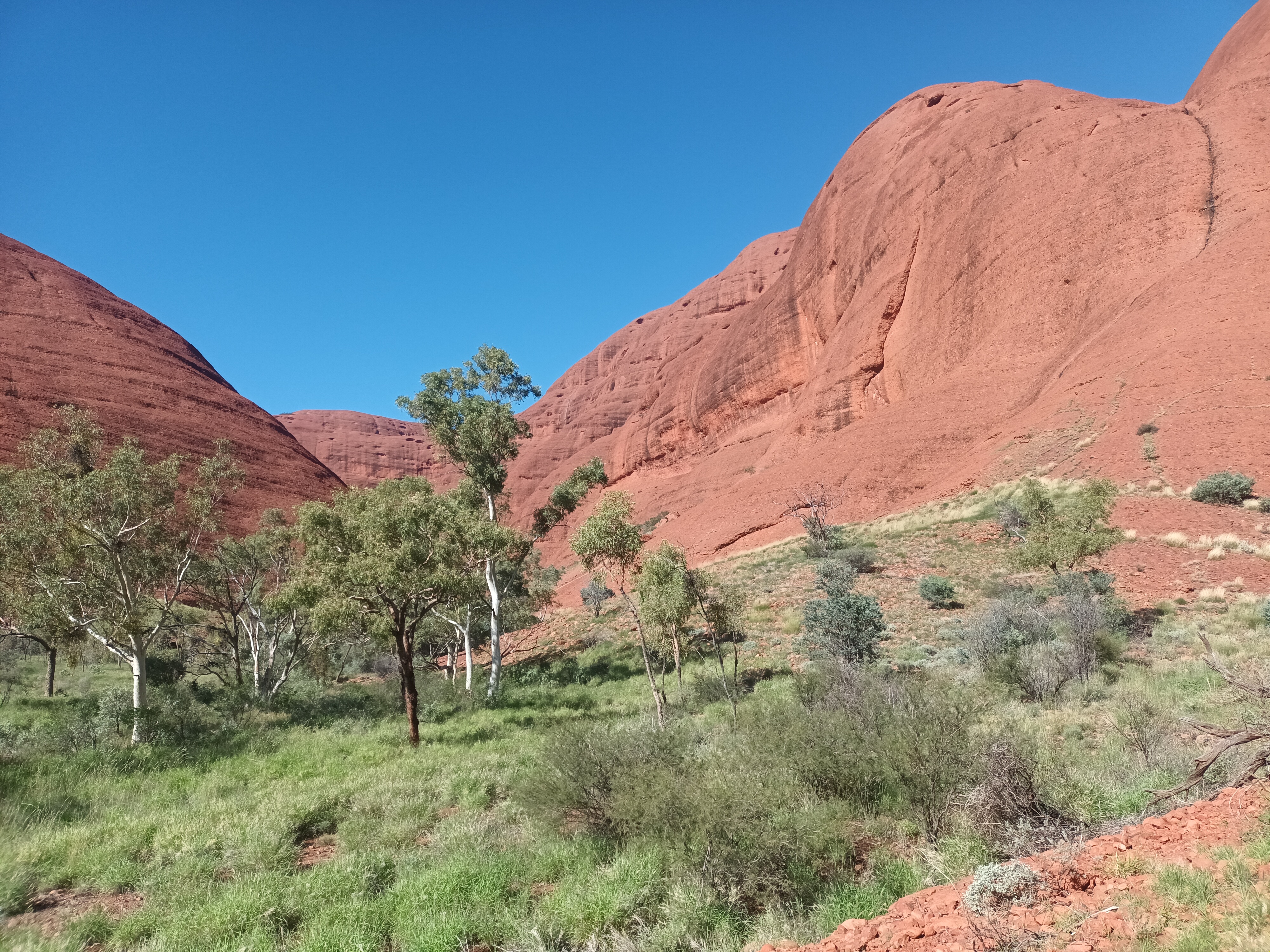
Biking Around Uluru and a waterhole at its base. The rim walk in Kings Canyon
Yularu, the township near Kata Tjuta National Park is effectively a tourist resort. It was formed out of a need in the early 1970s to coordinate tourist accommodation for Uluru and Kata Tjuta national Park. At that stage varied quality motels had sprung up around Uluru and the move to set up Yulara grew out of the need to tidy this all up. Today Yulara is run by the Indigenous Land Corporation and consists of several top class resorts and restaurants, a small town centre with shops, cafe, police and post office and the Ayers Rock Campground. It is quite tasteful and the only accommodation available near Kata Tjuta NP – being some 18kms from Uluru and 55kms from Kata Tjuta/the Olgas.

Field of Lights, Yulara – a solar light installation by British artist Bruce Munro – there are 50,000 lights over seven football fields of land
The more than 700 sq kms of Watarrka National Park and Kings Canyon lies a three and a half hour drive north east of Yulara and some 310 kms south west of Alice Springs. Known as the little brother of Uluru some argue that the canyon is in fact more spectacular. For us it was just as fascinating but contrasting. Different to Uluru it is a sedimentary rock made of rounded pebbles and sand that is usually held together by silica. Similar to sandstone but rougher. The canyon stands over 100 metres above the surrounding desert and was formed over hundreds of thousands of years through wind and water erosion. The six km rim walk shows off the canyons glorious deep ravines, a waterhole named the “Garden of Eden” and the long and rolling stretches of pitted red rock at its top. All in the spectacular red of the surrounding parkland. We walked the rim over three hours of at times relaxed worn paths or sometimes more demanding climbs. But all age friendly on top of breathtaking scenery. The canyon is home to over 600 plant species and various animals including a group of rock wallabies on a cliff face and kestrels floating above us looking for lunch. Again the summer heat (there is a 36C cut-off point) demands that the walks are closed after 9am on some days. People argue over the merits of the two internationally renowned tourist spots of Uluru and Kings Canyon. My view is they are different experiences both totally worth the time and effort.

Camping at Karlu Karlu/Devil’s Marbles
After several days in Alice Springs we have progressed east via a stop at Karlu Karlu or the Devil’s Marbles then a few days in Kurumba in the Gulf of Carpentaria to Port Douglas where we will shed the campervan and enjoy apartment living for a month. We cannot return to the Sunny Coast because we have rented our apartment until late September. The task now is for Scout and I to argue over the next trip. You all know the answer of course. We will both give options then Scout will decide! Nice to put the feet up though and catch up with the rugby for a while.

 Travels With Mr Gato Downunder
Hello Mike,
Uluru is Indeed in my bucket list !
This site is really impressive and beautiful. A bit far away from here though…
Hope a day.
It seems that options’ Scout aren’t bad at all 😉.
Be well.
Fabrice
LikeLike
Thanks Fabrice
Uluru and the centre is certainly worth a visit. Maybe we will see you in Australia someday
Mike
LikeLike